

Choosing a deck material means balancing upfront costs with long-term maintenance. In Indiana, the decision also depends on how well each material handles humid summers, heavy rain, freezing temperatures, and winter snow. These conditions can affect a deck’s appearance, durability, and maintenance needs over time.
This guide compares wood vs PVC deck materials to help homeowners understand their differences in cost, durability, appearance, and upkeep. Whether you’re building a new deck or replacing an existing one, you’ll learn what to consider before choosing the right material for your home.
Wood vs PVC Deck at a Glance
| Consideration | Wood Decking | PVC Decking |
| Upfront Cost | Generally lower for basic pressure-treated boards | Generally higher |
| Appearance | Natural grain and variation | Manufactured colors and textures |
| Routine Care | Cleaning plus periodic finishing | Cleaning; no staining or sealing |
| Moisture | Needs ongoing protection and inspection | Boards contain no wood fiber |
| Surface Damage | Can often be sanded or refinished | Repair options depend on the product |
Keep two things in mind when comparing these materials. Wood options like pressure-treated pine and cedar differ in cost, appearance, and maintenance needs. Also, neither wood nor PVC has a fixed lifespan, maintenance schedule, or guaranteed long-term savings. These depend on the specific product, climate, exposure, and installation quality.
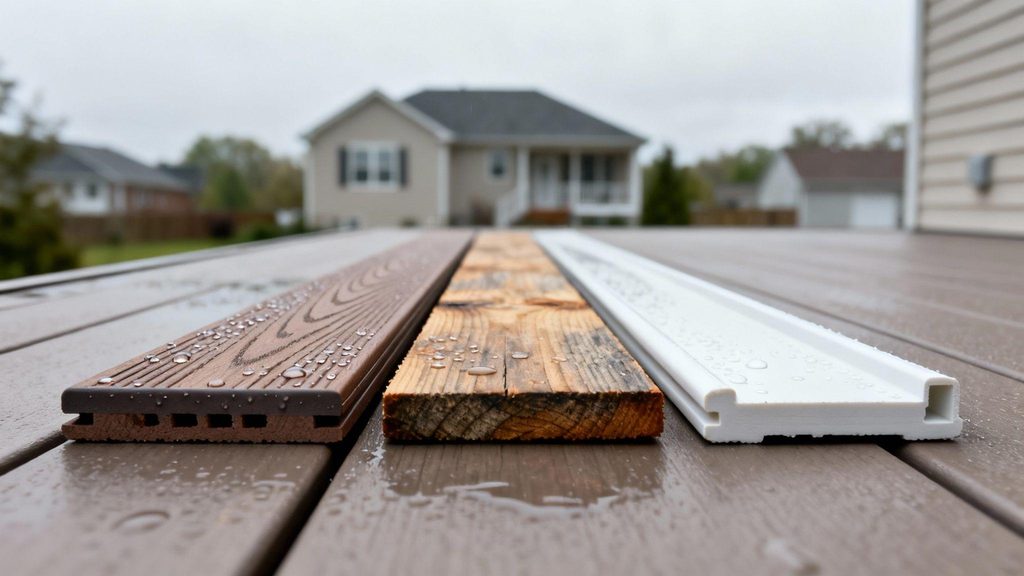
What Is the Difference Between a Wood and PVC Deck?
Wood and PVC decking differ mainly in their materials and maintenance needs. Wood offers natural grain and can be refinished, but requires periodic upkeep. PVC is a synthetic material that resists moisture and doesn’t need staining or sealing, although it still requires cleaning. Both come in different styles and price ranges.
Wood deck boards
Two common wood decking options are pressure-treated lumber and cedar. Pressure-treated lumber contains preservatives that help resist decay and insects, making it a generally affordable choice. Cedar, meanwhile, has natural resistance to decay and is valued for its color and grain. Both can be stained or finished, although cedar can also be left to weather naturally.
While both materials offer the appearance and texture of real wood, they require regular maintenance to preserve their condition. Wood is also commonly used for the supporting structure beneath deck boards, where deck framing consists of joists, beams, posts, and other structural components.
PVC deck boards
PVC decking is manufactured from synthetic materials without wood fibers, making the boards resistant to moisture absorption and wood rot. Manufacturers offer various colors, wood-grain textures, and finishes to resemble natural wood. However, dirt and debris can still support surface mold or mildew growth, so occasional cleaning is necessary.
PVC also differs from capped composite decking, which typically combines a wood-plastic core with a protective polymer shell. Their different construction affects cost, maintenance, and performance.
How Do Wood and PVC Deck Costs Compare?
Upfront project cost
Decking material prices alone don’t reflect the full project cost. To compare wood and PVC fairly, request installed quotes for the same deck design and scope, including:
- Demolition and removal of the existing deck, if applicable
- Framing and any necessary repairs or replacement
- Footings
- Stairs
- Railings
- Fascia and trim
- Fasteners and hidden clip systems
- Labor
PVC boards generally cost more upfront than basic pressure-treated lumber, but the total difference depends on deck size, design, and installation requirements. Joist spacing, fastening systems, and expansion gaps may also vary by product, affecting framing and labor costs.
Since material and installation prices differ by location, compare detailed local quotes rather than relying on general price estimates.
Cost of ownership
Upfront costs are only part of the comparison. To estimate long-term expenses over your planned ownership period, use:
- Initial installation + cleaning + refinishing + expected repairs or replacement = total ownership cost
Wood decks require periodic finishing, whether you handle the work yourself or hire a professional. PVC eliminates the need for staining and sealing, but regular cleaning, inspections, and occasional repairs are still necessary.
Avoid assuming PVC will pay for itself within a fixed number of years. Actual savings depend on wood maintenance requirements, labor costs, repair needs, and how long you plan to keep the deck.
What Will Each Deck Be Like to Own?
Cleaning and maintenance
Wood and PVC decking have different upkeep requirements, but both need regular cleaning and inspections. A deck maintenance checklist helps you spot wear early and prevent avoidable damage.
Wood requires regular cleaning, inspections for damaged boards or worn finishes, and periodic refinishing. Maintenance frequency depends on the wood species, finish, and exposure, so follow the manufacturer’s recommendations.
PVC requires less maintenance because it doesn’t need staining or sealing. However, routine cleaning and inspections are still necessary. Follow the manufacturer’s cleaning instructions, as unsuitable products or tools can damage the surface or affect warranty coverage. Before using a pressure washer, check the manufacturer’s restrictions.
What to inspect on both deck types
Regardless of the decking material, inspect your deck at least twice a year for:
- Railings and posts – Loose or unstable connections
- Stairs and treads – Damage, movement, or wear
- Fasteners and connectors – Corrosion, looseness, or deterioration
- Drainage – Standing water or poor drainage around and beneath the deck
- Framing and ledger connections – Moisture damage, decay, or loose connections
Appearance, comfort and repairs
Wood gives you natural grain, color variation, and flexibility. You can restain a wood deck in a different color years later, and many surface problems can be sanded or refinished. Weathering is part of its character, though some owners see it as wear.
PVC gives you consistency. Colors and textures are set at the factory, and boards look uniform over time. Some PVC lines look more natural than others, so judge them in person, not in a catalog photo.
Repairs differ too. Replacing a damaged PVC board depends on whether that exact color and profile is still available years later, and on what the manufacturer allows. Ask about both before you buy. Wood boards are easier to match, but new boards will look different from weathered ones until they age or get finished.
Heat is another comfort factor. Dark boards in direct sun can get hot underfoot with any material. Ask about the specific product’s heat behavior, and compare samples side by side in sunlight.
How Do Wood and PVC Perform in Indiana Conditions?
Indiana’s changing weather affects both decking materials, making proper installation and maintenance important.
- Rain and snow – Wood requires regular maintenance, while PVC resists moisture-related decay. Proper under deck moisture protection also helps protect the framing.
- Drainage – Both materials need proper spacing and airflow. Deck flashing protects structural connections from water intrusion, while under deck drainage systems help direct runoff away.
- Shaded areas – Prolonged dampness can encourage algae and mildew growth on either surface, requiring regular cleaning.
- Summer sun – Both materials can become hot and experience color changes. Surface temperatures and fading depend on color, finish, and product quality.
- Winter conditions – Freezing temperatures, snow removal, and de-icing products can affect decking. Follow the manufacturer’s care instructions.
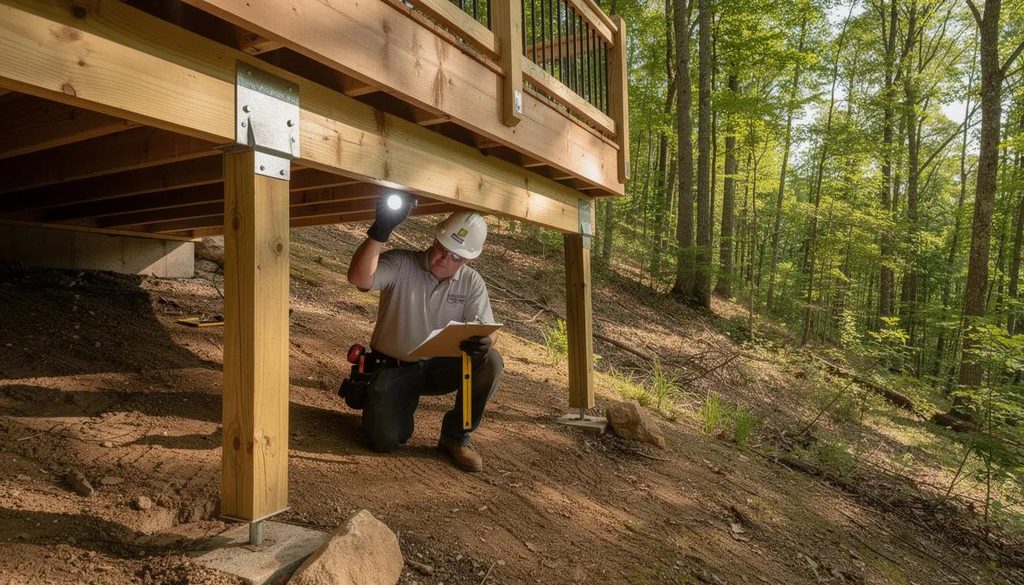
Although PVC boards resist rot, the supporting structure still needs protection. Wood joists, ledger boards, and connections remain vulnerable to moisture damage, making proper construction and inspections essential.
Preventing structural damage starts with proper drainage, flashing, and measures that protect deck joists from rot. New construction and major structural work must also follow applicable Indiana deck building codes and requirements overseen by the Indiana Department of Homeland Security.
When Is Wood the Better Fit, and When Is PVC?
When to choose wood decking
Wood is a practical choice if keeping upfront costs low is your priority or you prefer natural grain and texture. It’s also suitable if you’re comfortable with periodic staining, sealing, and other maintenance, whether you do the work yourself or hire a professional.
When to choose PVC decking
PVC makes sense if you want to avoid regular refinishing and are willing to pay more upfront for reduced maintenance. It may be particularly appealing if you plan to stay in your home long enough to benefit from fewer upkeep tasks.
Neither material is right for every homeowner. The better choice depends on your budget, appearance preferences, maintenance expectations, and how long you plan to use the deck.
What to check before deciding
Before choosing, compare physical samples outdoors in sunlight and shade to see how they look in different conditions. Review each product’s maintenance instructions and warranty exclusions to understand its long-term requirements.
Finally, request at least two detailed quotes covering the same project scope. Knowing how to choose a deck contractor can help you evaluate those proposals, while a deck planning checklist helps you define the project’s requirements before requesting estimates.
Frequently Asked Questions
Is a PVC deck the same as a composite deck?
No. PVC boards are made without wood fiber. Composite boards combine wood fiber and plastic, and capped versions add a protective shell. They differ in construction, price, and care requirements, so confirm exactly which product a quote refers to.
Can PVC boards be installed on an existing wood deck frame?
Sometimes, but not automatically. Having a deck doesn’t prove the frame suits new boards. PVC products have their own requirements for joist spacing, fasteners, and support, and the existing structure must be sound.
Have an installer inspect the frame and confirm the manufacturer’s installation instructions before you order materials.
Does a PVC deck still need maintenance?
Yes, though less than wood. You skip staining and sealing but still clean the surface following the manufacturer’s directions, and inspect railings, stairs, fasteners, drainage, and framing.
Final Takeaway
The wood vs PVC deck decision comes down to your budget, maintenance preferences, and long-term plans. Wood generally costs less upfront but requires periodic refinishing, while PVC costs more initially but needs less upkeep.
Before deciding, compare quotes for the same project scope, review maintenance requirements, and examine samples outdoors. The right material should fit your budget, suit your home’s appearance, and meet your expectations for years to come.