

Warped boards, a wobbly railing, or a bouncy floor mean your deck is showing its age. Deciding whether to repair or replace deck damage depends heavily on safety, the age of the materials, and the extent of the decay. While surface issues are easy to spot, the real deciding factors live underneath in the hidden ledger board, joists, posts, and footings.
This guide provides a clear framework for evaluating your outdoor space with specific inspection steps, realistic cost comparisons, and material guidance tailored for everything from aging pressure-treated wood to newer cedar platforms.
Deck Repair vs Replace
Choosing the right path depends on structural integrity. You can easily repair minor surface wear or isolated board damage through simple maintenance. These targeted fixes quickly resolve superficial issues like splinters, peeling stains, or warped planks to extend the deck’s lifespan.
However, hiding deep rot with cosmetic fixes creates serious safety hazards. You must replace the entire deck if the structural framing, support posts, or ledger boards are rotting or shifting. If decay compromises vital load-bearing components such as joists or railings across 30% of the build, a complete replacement is the safest and most cost-effective option.
Deck Repair vs. Replace – The Simple Decision Checklist
Repair may be enough if
- Only a few boards are cracked, warped, or damaged
- Railing fasteners are loose, but the underlying framing is solid
- The deck surface needs cleaning, sealing or staining
- The structure is level, stable, and does not flex underfoot
- The deck is less than 10 years old and was originally built to code
- Repair costs are well under 50% of what a full replacement would cost
Replacement is almost certainly smarter if
- Joists, beams, posts, or the ledger board are rotting or soft
- The deck sags, bounces, or is pulling away from the house
- Railings or stairs are structurally unsafe
- Rot or insect damage has spread to multiple areas
- Repairs keep coming back; you are fixing the same problems year after year
- The deck was built before the current safety codes and would not pass inspection
- The layout no longer fits how your family uses the space
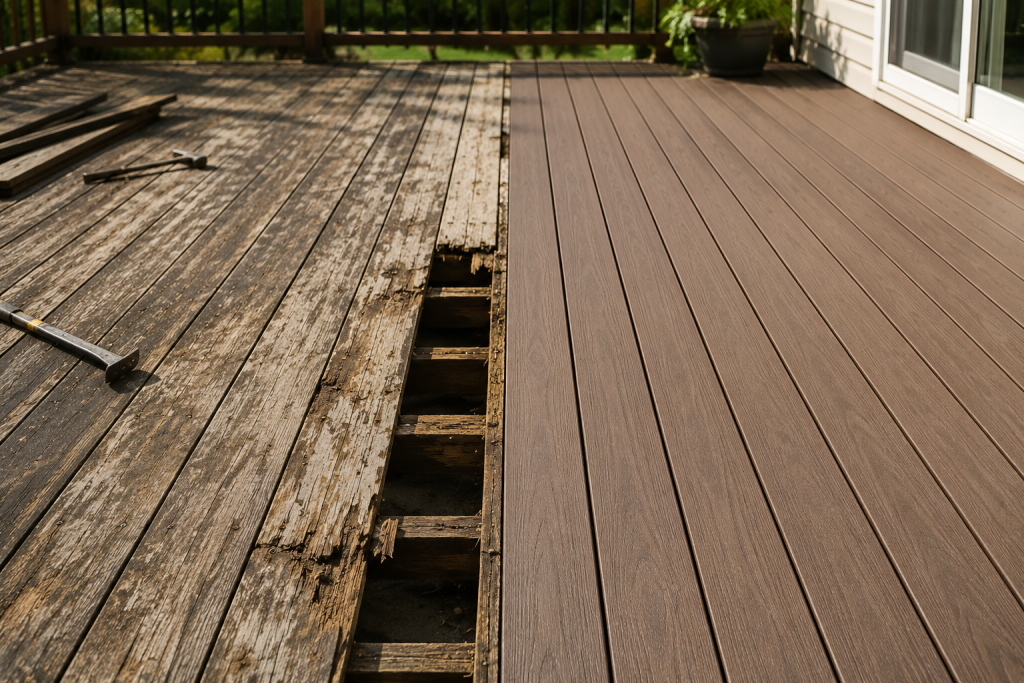
How to Inspect Your Deck Before Deciding Anything
Don’t call a contractor or price materials until you have done a basic inspection yourself. It takes about 20 minutes and will make every conversation afterward more productive. Here is how to do it right.
The screwdriver test
Press the tip of a flathead screwdriver firmly into any wood you can access, like joists, posts, the ledger board, and post bases. Healthy wood resists. If the screwdriver sinks more than a quarter inch without real resistance, the wood fibers have broken down. That is structural rot, not surface wear, and it changes the entire decision.
The five areas that matter most
Inspect these components in order. The first two dictate the final repair or replace decision.
- The ledger board – Connects the deck to your house. Check for missing deck flashing, siding stains, or soft wood near the wall.
- Joists and beams – Probe the under-deck framing with a screwdriver. Look for rusting hangers, crumbling wood, or sagging. Multiple rotted joists require a complete structural rebuild.
- Posts and bases – Inspect where wood support posts meet concrete footings. Watch for loose hardware, splitting, or movement when pushed. This is a common entry point for rot.
- Railings – Push every section to check stability. Building codes require railings to withstand 90 kilograms of force. Any movement under hand pressure indicates a code violation.
- Surface boards – Inspect the top planks last. Warped or cracked boards only require simple, isolated repairs. The critical factor is the health of the underlying framework.
When Deck Repair Makes Sense
A deck with solid framing and isolated surface damage is a strong candidate for repair. Here are the most common repairs, what they involve, and what they realistically cost in materials:
| Repair | Materials Cost | Estimated Time |
| Replace one or two boards | $25-$85 | 1-2 hours |
| Secure loose railing components | $10-$15 | 1 hour |
| Shore up a wobbly post with blocking | $50-$75 | 1-4 hours |
| Replace a broken baluster | $20-$35 | 1-2 hours |
| Stiffen bouncy stairs with sister stringers | $85-$100 | 2-3 hours |
| Refinish weathered wood surface | $100-$300 | 8-12 hours |
Materials only. Labor costs vary significantly by region.
Essential deck repair principles
- Upgrade loose fasteners – Never hammer backed-out nails down. Pull them and install longer deck screws into fresh wood to prevent them from loosening again.
- Identify failure patterns – Isolated damage requires a simple repair. However, identical issues appearing in multiple spots signal systemic deterioration that localized patching cannot fix.
- Evaluate structural value – Repairing a sound frame extends deck life by 5-15 years. This investment offers great value, provided the skeleton justifies the cost.
When Deck Replacement Is the Safer Choice
Certain warning signs indicate that repair is not just inadequate; it is a false economy that delays an inevitable, potentially dangerous outcome.
Replace the deck entirely if you identify any of the following warning signs:
| Warning Sign | Risk & Structural Impact |
| Ledger Board Rot | A critical emergency. A rotting house attachment point can trigger sudden, catastrophic deck collapse. |
| Failed Framework | Multiple joists or posts failing a screwdriver test indicate deep rot that cannot be fixed board by board. |
| Advanced Age | Decks over 20 years old without a professional inspection likely harbor hidden moisture damage. |
| Physical Instability | Visible bounce or flexing underfoot during normal walking signals that the skeleton is no longer safe. |
| Loose Railings | Wobbly railings in multiple sections point to systemic framing instability rather than an isolated post issue. |
| Widespread Damage | When surface decay impacts over 30% of planks, cosmetic resurfacing costs approach full replacement expenses. |
| Outdated Codes | Decks built before modern safety updates often lack critical ledger attachments and weight capacities. |
The costly mistake of surface-only fixes
The most common financial mistake homeowners make is replacing top boards without checking the framing underneath. While the deck may look restored for a short period, structural issues will inevitably return. Executing piecemeal spot fixes on a failing 15-year-old framework over several years frequently costs more than a full replacement, leaving you with zero structural improvements and no warranty.
What About Deck Resurfacing?
Resurfacing means replacing the surface boards while leaving the existing frame intact. It sits between repair and full replacement in both cost and scope, and it can be a smart option under the right conditions.
Choose resurfacing when
- The frame passes the screwdriver test throughout
- Joists are dry, solid, and properly spaced
- Footings and posts show no signs of movement or rot
- The existing layout still works for how you use the space
- You want to upgrade from wood to composite without the full cost of demolition
Avoid resurfacing when
- Any part of the frame is soft or compromised
- The deck is sagging or pulling away from the house
- The ledger connection is failing
- Posts or footings are unstable
Modern deck resurfacing coatings are thick elastomeric products that fill cracks, hide splinters, and create non-slip textures. However, they permanently conceal wood grain to look like composite decking, making them a poor choice if you want to preserve a natural wood appearance. Crucially, always avoid any contractor who quotes this service without inspecting your deck’s framing first.
Is It Cheaper to Repair or Replace a Deck?
The right choice depends on the project’s scope and how honestly you calculate long-term cumulative costs rather than just today’s estimate. As a general rule of thumb, experienced contractors recommend full replacement if repair costs approach 50-60% of a rebuild. This is because repairs only patch an aging structure that continues to degrade, whereas a new build resets the deck’s lifespan entirely.
Typical cost ranges (labor and materials)
- Minor repairs (boards, railings, fasteners) – $200-$1,500
- Restoration/resurfacing – $700-$2,500
- Full replacement (300 square feet with railing) – $8,000-$35,000+
When evaluating these numbers, the math on repeated repairs almost always favors replacement once you account for cumulative spending over five years.
Why replacement wins long-term
- Full warranty protection – New decks offer comprehensive structural and manufacturer material warranties.
- Resets the lifespan – A brand new build delivers a fresh 25-30 year service life.
- Saves money – Replacement prevents the compounding costs of fixing an old structure that continues to deteriorate.
Furthermore, a full replacement is a defensible financial asset rather than just an aesthetic upgrade. Remodeling Magazine’s Cost vs. Value Report found that wood deck additions recoup approximately 67% of their cost at resale, while composite decks recoup about 54%, although results vary by region and market conditions.
Should You Repair or Replace Your Home Deck Before Selling?
An unsafe deck can derail your home sale. Buyers will use visible wear to negotiate lower prices, while inspectors look for structural hazards like loose railings or rotted framing that can scare off lenders and delay your closing.
Address the damage based on its severity:
- Fix cosmetic damage – Replace cracked surface boards and apply fresh stain. This quick fix boosts curb appeal and yields a high return on investment.
- Replace structural damage – Never try to hide rotted framing. State laws require you to disclose known defects, and inspectors will find them anyway. Proactive replacement prevents legal liability and attracts buyers.
If you are unsure of the deck’s condition, hire a professional inspector before listing. This small upfront expense clarifies whether you need a quick repair or a full replacement, ensuring you price your home accurately.
Choosing the Right Decking Material When You Replace
If you decide to replace, your material choice determines your maintenance burden for the next 25 years. Here is how the main options compare:
- Pressure-treated wood ($3-$6/square feet) – Lowest upfront cost, natural look, but requires annual or biennial cleaning, staining, or sealing to prevent warping and discoloration.
- Cedar and redwood ($4-$8/square feet) – Naturally rot-resistant, but defenses fade without consistent maintenance, leading to significant wear within 15-20 years in wet climates.
- Composite ($5-$13/square feet) – Resists fading, warping, splintering, and insects with no staining or sealing required. Most products carry a 25-year fade and stain warranty.
- PVC (highest price point) – 100% synthetic, maximum moisture resistance, and highly durable for high-rainfall or poolside areas. It feels slightly less natural underfoot.
According to North American Deck and Railing Association (NADRA), composite and PVC decking products continue to gain market share as homeowners increasingly favor low-maintenance alternatives to traditional wood.
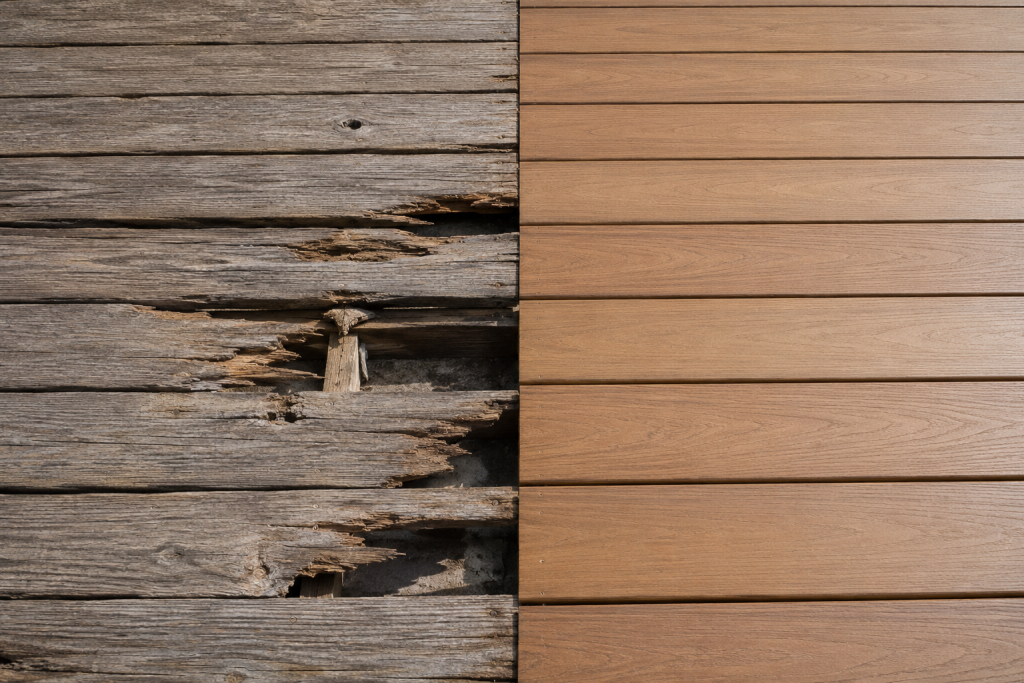
When to Call a Deck Contractor
Do not wait for visible failure. Schedule a professional inspection if you notice:
- Movement, flexing, or bouncing in the deck, stairs, or railings
- Soft, spongy, or deteriorating wood
- Rust stains around fasteners
- Separation between the deck and the house
- Inaccessible framing or uncertainty about the deck’s condition
- An existing deck that requires evaluation before a home purchase
A qualified contractor should inspect the entire structure, including the framing beneath the deck, before recommending repairs or replacement. Be cautious of estimates provided without a thorough structural assessment.
Conclusion
Determining whether to repair or replace deck components comes down to the condition of the structure, not just its appearance. Surface issues such as worn boards, loose fasteners, or peeling finishes can often be repaired, while widespread rot, structural movement, or framing deterioration may justify a full replacement.
Regular inspections and timely maintenance can extend a deck’s lifespan and help prevent costly safety hazards. When in doubt, a professional assessment provides the clearest path forward, ensuring the deck remains safe, functional, and a valuable outdoor living space for years to come.