

The pros and cons of composite decking are worth knowing before you commit to one of the bigger home improvement decisions you’ll make. Most homeowners start with the brochure – beautiful boards, long warranties, weekend mornings back in your pocket. What the brochure skips is the full picture, which includes the upfront cost, the heat on a July afternoon, and the quality gap between budget boards and the real thing.
This guide covers everything honestly. Below, you’ll find a straightforward breakdown of what composite decking actually delivers, where it falls short, and how to decide whether it’s the right fit for your home, without the sales spin.
Is Composite Decking Worth It?
Yes, for most homeowners who plan to stay in their home and want a deck they can actually enjoy instead of maintain.
Balancing the pros and cons of composite decking proves it is worth it if you want lower long-term costs, minimal upkeep, and a deck that holds up to real family life. It is probably not worth it if your only priority is the lowest possible upfront price, or if the exact texture and character of natural wood is non-negotiable for you.
The nuance matters, so keep reading.
What Is Composite Decking?
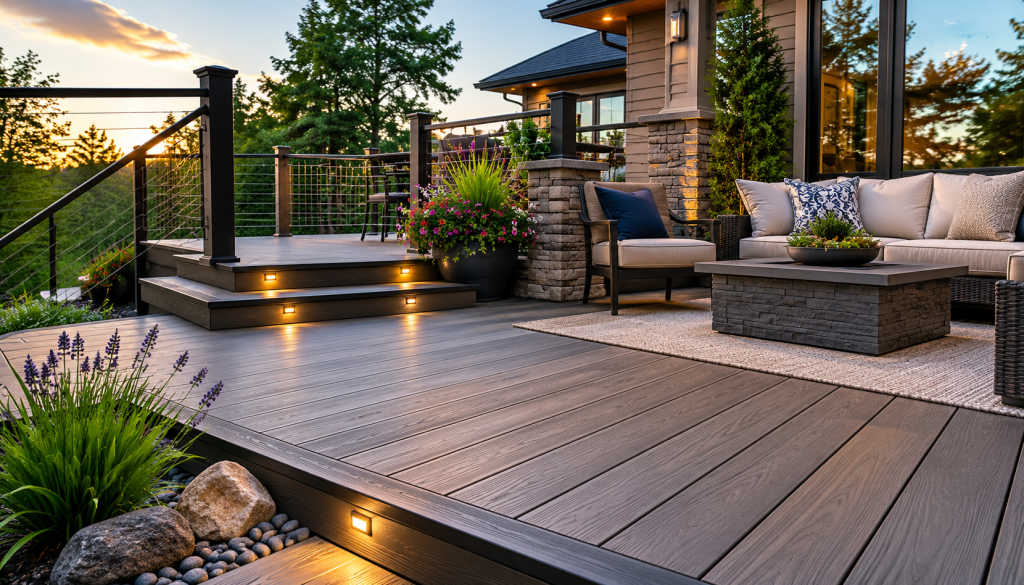
Composite decking blends wood fibers, recycled plastics, and bonding agents to replicate the look of timber without its structural weaknesses. However, quality and durability vary significantly by manufacturing type:
- Capped composite – Features a core wrapped in a hard polymer shell. This modern industry standard offers maximum resistance to scratches, stains, and moisture.
- Standard composite – Combines wood and plastic without an outer protective shell, making it cheaper but highly vulnerable to staining.
- Hollow composite – Utilizes a lightweight, honeycomb internal structure that lowers upfront costs but requires strict watertight maintenance.
Note: Fully synthetic PVC boards contain zero wood fiber. They belong to a separate category with distinct performance traits. Always verify the specific type before purchasing, as a capped board and an uncapped hollow board represent completely different investments.
Advantages of Composite Decking
Dramatically lower maintenance
Lower maintenance is the headline advantage, and it’s real. Wood decks need sanding, staining, sealing, and periodic board replacement. Composite decks need occasional washing with warm, soapy water. No annual treatments, no toxic chemical sealants, no weekend projects that steal summer.
No splinters, exposed nails, or rot
Composite boards won’t splinter, and quality installations use hidden fasteners that leave a clean, screw-free surface. For families with kids and pets who use the deck barefoot, this is a genuine safety upgrade over aging wood.
Resistant to rot, insects, and moisture
Unlike timber, composite boards don’t absorb water the way wood does, especially capped boards, which offer 360-degree core protection, including groove areas. This makes composite viable around pools, in humid climates, and anywhere moisture is a regular concern. It also means no woodworm, no beetle damage, no termite tunneling through the boards themselves.
However, you should bear in mind that your timber subframe still requires protection against termites and moisture, regardless of the decking material you choose to install on top of it.
Longer lifespan
Most pressure-treated wood decks require significant repairs or full replacement within 10-20 years, even with diligent maintenance. Quality composite decks routinely come with 20-25 year warranties and are built to outlast them. That lifespan difference dramatically changes the total cost calculation.
Consistent color and appearance
Modern third-generation composite boards have come a long way from the plastic-looking early products. Many now feature embossed grain patterns with subtle color variation, so no two boards look identical. Unlike traditional timber, composite decking retains its appearance without the need for annual staining, while built-in UV inhibitors significantly slow down any fading.
Eco-friendly construction
Many composite boards are manufactured from recycled plastics and reclaimed wood fibers, diverting significant waste from landfills. Composite manufacturing also eliminates the need for chemical stains and sealants throughout the product’s life, a meaningful reduction in environmental impact compared to maintaining a wood deck year after year.
Wide color range, no painting required
Composite boards come pre-finished in colors ranging from light natural tones to deep contemporary grays and blacks. No painting, no waiting for coats to dry, no brush cleanup. The color is part of the board.
Disadvantages of Composite Decking
Higher upfront cost
Higher upfront cost is the biggest honest drawback. Composite decking typically costs 15-20% more than pressure-treated pine at purchase, and even more than basic softwood. For large decks, that gap in material cost is significant. The long-term math often favors composite once maintenance costs are factored in, many homeowners reach break-even within 2-3 years, but the upfront check is real.
It gets hot in direct sun
Composite boards absorb and retain more heat than timber in direct sunlight. On a 90°F summer day, darker-colored composite can become genuinely uncomfortable for bare feet. Lighter colors and products with heat-reducing coatings help, but if your deck gets full afternoon sun with no shade, this is worth planning around.
The color is permanent
You choose it once. Unlike wood, composite can’t be sanded down and refinished in a new color if you change your mind or your home’s exterior changes. Some fading from UV exposure is inevitable over the years, particularly with darker shades, though high-quality capped boards handle this far better than uncapped alternatives.
Expansion and contraction require correct installation
Composite boards expand and contract with temperature more than wood does. Boards installed too tightly together, or too close to walls and fixed structures, can warp or buckle as temperatures swing. This isn’t a flaw in the material; it’s an installation requirement. Get it right, and you’ll never notice it. Get it wrong, and you’ll be pulling boards up.
Not all products are equal
The composite market spans a wide range of quality. Budget boards can fade, swell, or warp within a few years and look nothing like the premium product you saw in a showroom. Always compare warranties, specifically stain, fade, and structural warranties, and verify what the warranty actually covers before purchasing.
Heavier than timber
Composite boards are significantly heavier than equivalent wood boards. This means existing timber subframes often need to be reinforced with additional joists at closer spacing before composite can be safely installed on top. Factor this into your renovation budget.
Still needs cleaning
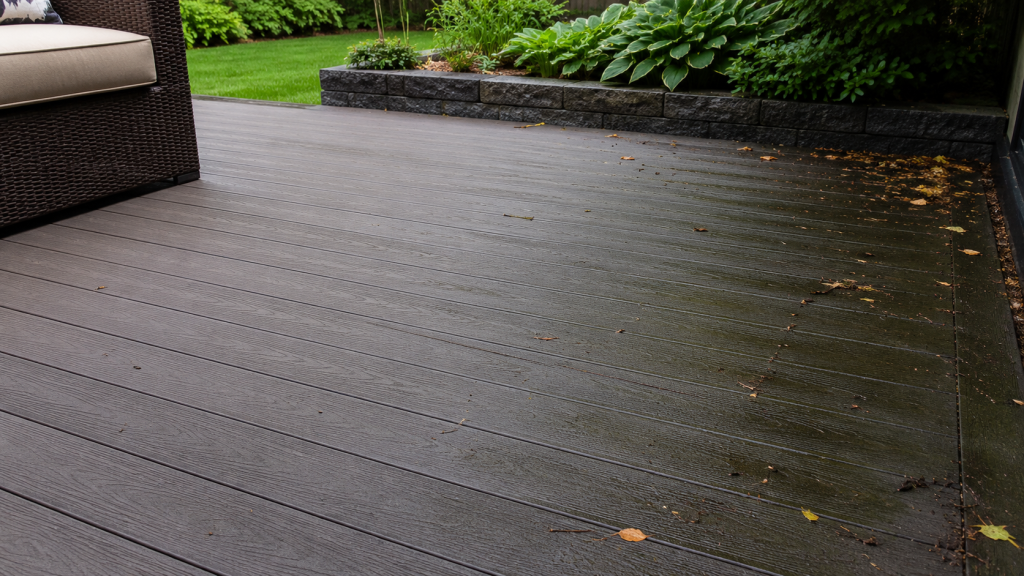
“Low maintenance” isn’t “no maintenance”. Leaves, debris, and standing moisture in shaded areas can lead to surface mold and mildew if left unchecked. Composite resists these issues better than wood, but periodic cleaning is still required.
Composite Decking vs. Wood Decking
| Factor | Composite | Pressure-Treated Wood |
| Upfront Cost | Higher | Lower |
| Annual Maintenance | Minimal | Significant |
| Lifespan | 25-30 years | 10-20 years |
| Rot/Insect Resistance | Excellent | Moderate |
| Splinters | None | Yes, over time |
| Color Options | Wide, factory-set | Paint/stain anything |
| Heat in Sun | Warmer | Cooler |
| Environmental Impact | Lower (recycled materials) | Varies by source |
| Long-Term Value | Usually better | Higher ongoing cost |
Wood wins on upfront cost and natural aesthetics. Composite wins on nearly everything else over time.
Is Composite Decking Any Good for Indiana Homes?
Indiana’s climate is one of the strongest arguments for composite. The state sees genuine freeze-thaw cycles, humid summers, heavy rainfall, occasional snow loads, and intense UV exposure from spring through fall, conditions that accelerate the deterioration of untreated or under-maintained wood.
Composite decking handles these conditions well, provided it’s installed correctly:
- Freeze-thaw – Proper board spacing prevents warping from thermal expansion
- Humidity – Drainage gaps and subframe ventilation prevent trapped moisture
- UV exposure – Capped composites with built-in inhibitors protect against the Indiana sun
- Snow/ice – Use plastic shovels instead of metal blades to prevent scratches
Critical Note: Your wood subframe still faces a harsh moisture environment. Treat it thoroughly, or upgrade to an aluminum subframe for a fully rot-resistant system.
Who Should Choose Composite Decking?
Composite is the right call if you:
- Hate annual staining and sealing
- Have kids or pets using the deck regularly
- Plan to stay in the home for more than five years
- Live somewhere with significant moisture, humidity, or weather variation
- Want a clean, finished appearance with consistent color
- Are replacing a wood deck that’s already causing you problems
Who May Not Need Composite?
Composite may not be the best fit if you:
- Are planning to sell the home soon and want to minimize upfront spend
- Have a tight construction budget with no flexibility
- Genuinely love the natural character and refinishing flexibility of real wood
- Are building a small or temporary deck where longevity isn’t the priority
- Are comparing budget composite options without understanding the quality gap; a cheap composite board is often worse than a well-maintained wood deck
Conclusion
Ultimately, choosing the right material comes down to what you want from your outdoor space. If you want a deck that performs year after year with minimal maintenance, composite makes a compelling case, especially in climates with harsh seasonal extremes.
A successful deck project starts with quality materials and proper installation. Working with an experienced deck contractor can help ensure the framing, drainage, and installation requirements are addressed from the start. A well-built composite deck doesn’t just hold up—it lets you spend less time maintaining your deck and more time enjoying it.