

Most deck maintenance checklists tell you to sweep, clean, and reseal. Few tell you why decks fail years before they should, or how to tell a deck that just looks tired from one that’s actually becoming unsafe.
This guide is built around one idea: maintenance isn’t about keeping a deck pretty, it’s about catching real failure points — moisture at the ledger board, fastener movement, trapped water — before they turn into a rebuild. Use it as your working deck maintenance checklist, whether you own wood, composite, or aren’t sure which parts need which kind of attention.
Why a Real Deck Maintenance Checklist Matters
Decks rarely fail all at once. They fail quietly, one skipped inspection at a time.
Understanding how long a deck lasts also depends heavily on how well moisture, rot, and structural problems are identified and addressed over time. The framing underneath is almost always the first thing to go, long before the visible boards look bad.
Cleaning and staining make a deck look better — that’s cosmetic maintenance, and it matters. But structural maintenance — checking the ledger board, probing for rot, testing fasteners — determines whether the deck is actually safe in five years. A deck can look freshly stained with a rotting joist underneath it.
Routine maintenance prevents rot from starting and catches loose fasteners before they become hazards. It can’t reverse damage already set in: once a joist is soft and spongy, no sealant fixes it — that’s a repair conversation, not a maintenance one.
This guide isn’t written for builders. It’s for homeowners who want to know what to check themselves, what’s normal wear, and when a problem has crossed into “call a professional.”
How to Use This Checklist
Surface-level checks like sweeping, visual inspection, tightening an accessible screw, are safe DIY territory. Anything involving the substructure, ledger board integrity, or a post that feels soft is worth a professional opinion.
Age and exposure change your priorities. A 3-year-old deck mostly needs cleaning and fastener checks. A 10-year-old deck in a shaded, humid yard needs a close annual look at the ledger board and posts, since that’s where moisture has had the longest time to work.
Skipping steps rarely causes immediate failure — that’s the trap. Skip a cleaning and the deck looks fine next weekend; skip it for three summers straight and trapped debris has been feeding rot somewhere you never look. Deck failure is almost always accumulated, invisible neglect, not one dramatic event.
Core Deck Maintenance Checklist (Applies to All Decks)
Inspect the Deck Structure and Surface
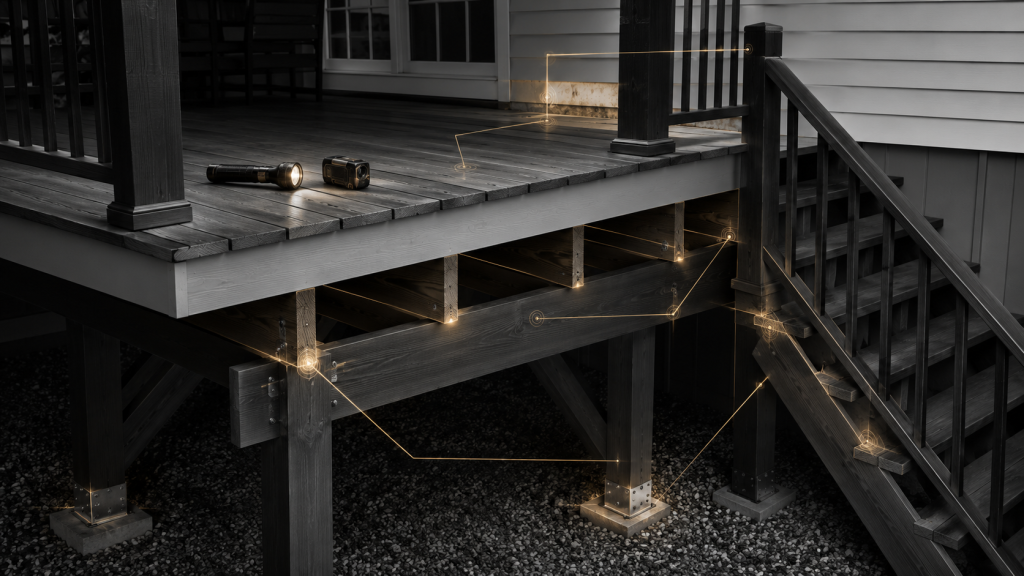
Walk the full deck, and go underneath it too — not just across the top. Check deck boards for cracks, warping, or spots that feel soft or spongy underfoot. Push and pull on railings and stairs; any movement is worth investigating. Look closely at the ledger board — the board bolted to your house, and the single most common origin point for deck failure, for gaps, staining, or soft wood. Check support posts and framing for cracking, leaning, or discoloration where posts meet the ground or footings.
Pay particular attention to areas where moisture can reach the framing, since knowing how to protect deck joists from rot can significantly extend the life of the structure.
Why it matters: catching a soft ledger board early might mean replacing flashing. Catching it late can mean replacing the whole connection.
Check and Secure Fasteners
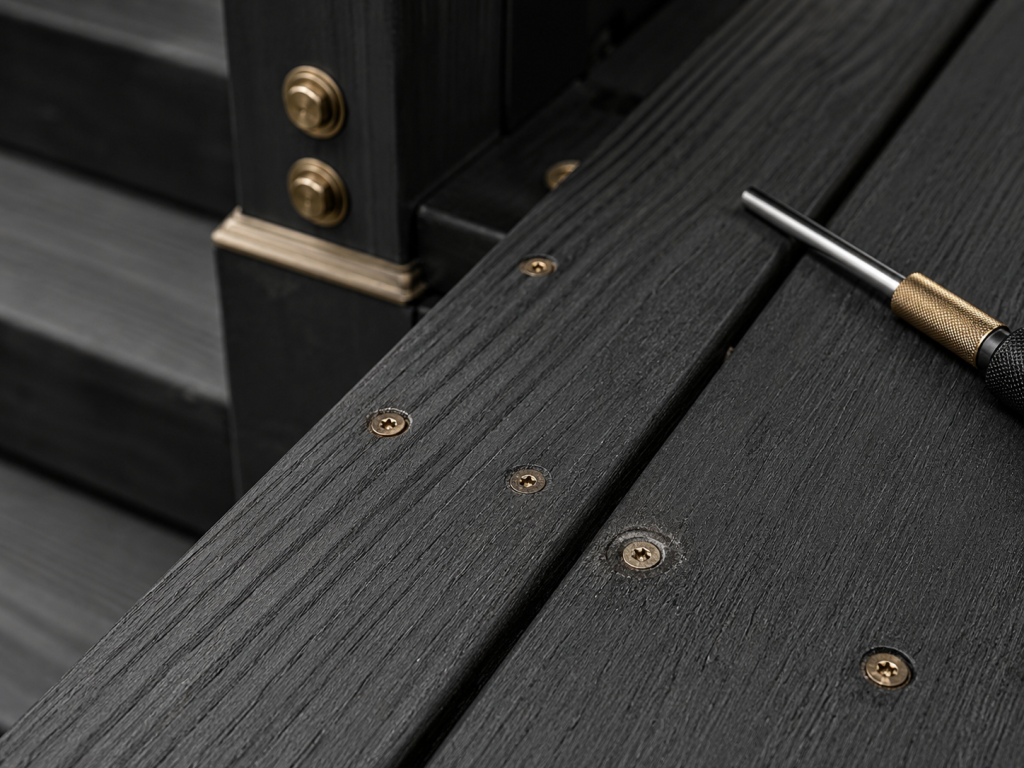
Look for screws backing out or nail heads sitting proud of the board, and check for rust or corrosion, which weakens a fastener’s grip over time. Test stair and railing connections specifically — they see the most repeated stress.
What happens if skipped: a single loose fastener won’t collapse a deck, but movement in one spot transfers stress to the boards and framing around it, accelerating wear elsewhere.
Clean the Deck Surface Properly
Clear leaves and debris, especially from between boards, where it traps moisture. Use a cleaner formulated for your specific deck material rather than a generic all-purpose one, and follow proper pressure washing a deck practices — high pressure shreds wood fibers and etches composite, doing more damage than the dirt ever would.
Important boundary: cleaning removes what’s on the surface. Stripping wood fibers with too much pressure isn’t maintenance — it’s damage that then needs its own repair.
Identify Repairs That Shouldn’t Be Delayed
A loose board today is a tripping hazard tomorrow. A crack spreading along the grain (rather than staying put) usually means structural failure, not cosmetic wear. Early rot — soft spots, a screwdriver sinking in easily — needs addressing before it spreads.
Wood Deck Maintenance Checklist
Wood decking requires the most hands-on maintenance of any decking material, largely because it’s an organic material that absorbs moisture rather than repelling it.
Inspect for Moisture Damage and Rot
Rot concentrates in high-risk zones: post bases where wood meets concrete or soil, stair stringers, and any part of the deck that stays shaded and damp longer than the rest. A simple test many contractors use: press a flathead screwdriver into a suspect spot. Healthy wood resists; if it sinks in easily or crumbles instead of splintering, you’re likely looking at rot.
Graying and light surface cracking are cosmetic and expected — wood grays from UV exposure regardless of species. Soft, spongy texture or wood that crumbles signals decay past the surface.
Sanding and Sealing
Wood needs a protective coating because it has no built-in moisture barrier. Sealer keeps water from soaking into the grain; without it, wood swells wet and shrinks dry, and that movement causes cracking and warping. Rather than a fixed calendar, watch the wood: when water stops beading and starts soaking in within a few seconds, the sealer has broken down and it’s time to reapply.
Wood-Specific Mistakes to Avoid
Trapping moisture under rugs or planters creates a permanently damp spot — exactly where rot starts. Sealing over dirt, flaking stain, or a damp surface means the new coat won’t bond and will fail early. And “pressure-treated” doesn’t mean “maintenance-free” — treatment resists insects and slows decay, but doesn’t eliminate the need for cleaning, sealing, and inspection.
Composite Deck Maintenance Checklist
Composite decking is marketed as low-maintenance, and compared to wood, it is. But “low-maintenance” isn’t the same as “no-maintenance,” and treating it that way is one of the more expensive mistakes composite deck owners make.
What Composite Decks Still Need (and Don’t)
Composite resists rot, insects, and splintering because its outer layer is a synthetic shell, not exposed organic material. What it doesn’t resist is surface mold and mildew film, which grows on the pollen and dirt that settles on any deck over time. Composite boards also expand and contract with temperature, so fasteners and board gaps still need periodic checking, especially in the first few years after installation.
Cleaning Composite Without Damaging It
A dark, slightly slippery film is almost always surface mold, not a structural problem — it cleans off. Use only manufacturer-approved cleaners: bleach-heavy or acidic products can strip the protective cap layer, and an unapproved cleaner is a common cause of denied warranty claims. Textured, wood-grain composite also holds more dirt in the grooves than smooth boards and needs slightly more frequent cleaning.
Common Composite Maintenance Myths
Composite doesn’t need no maintenance — just less. Skipping cleaning entirely lets mold film build up and stain over time. Surface mold isn’t failure; it’s a cleaning issue, since composite’s core doesn’t feed rot the way wood does. And not all composite is the same — older, wood-heavy composite is more moisture-absorbent and prone to fading than modern capped products.
Deck Maintenance Tips That Actually Prevent Failure
Beyond the checklist, a few ongoing habits catch problems a once-a-year inspection can miss: keep drainage paths clear, since blocked gaps or clogged channels underneath are a leading cause of trapped moisture; avoid moisture-trapping accessories like rugs and non-breathable furniture feet; watch high-traffic zones, which wear fastest and show early issues first; and pay attention to how water behaves after rain — beading and running off is good, pooling means a drainage or sealant problem.
Why this works: a checklist tells you what to check once a year. Watching how your deck actually behaves catches problems that develop between inspections.
DIY Deck Maintenance vs. When to Call a Professional
Homeowners can safely handle: routine cleaning and debris removal, visual inspections of boards, railings, and visible fasteners, and tightening screws you can reach without disassembling anything.
Maintenance is no longer enough when you see: sagging framing (any visible dip or bounce), widespread rot beyond an isolated board, ledger board separation or softness at the house connection, or repeated board failures in the same spot — a sign something underneath is causing it.
If you’re seeing any of these, maintenance has already been outpaced by the problem — this is repair territory, worth a professional opinion before deciding how far it extends. Once maintenance has been outpaced by structural damage, knowing when to repair or replace your deck becomes the next important decision.
Deck Maintenance in Central Indiana
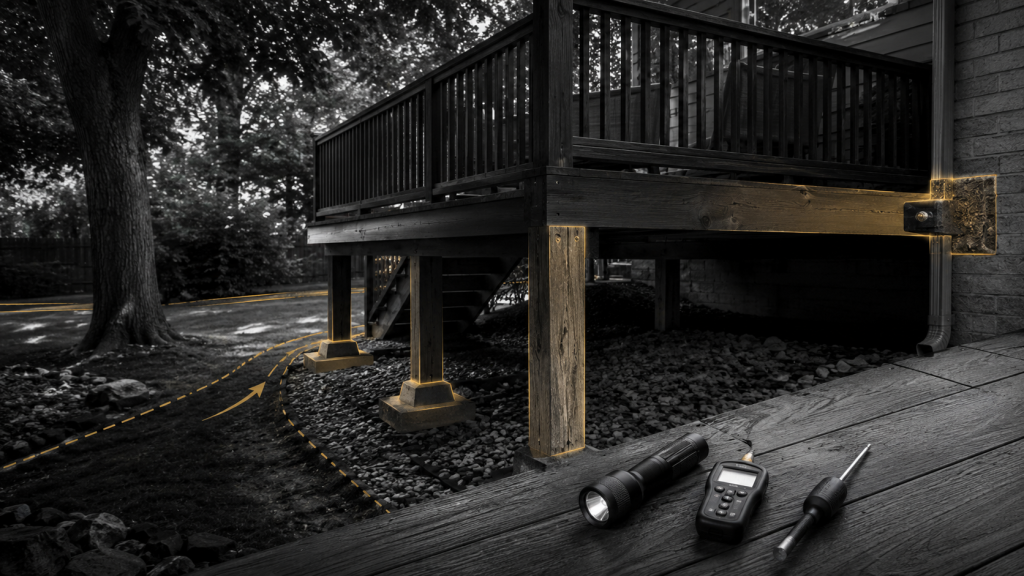
Central Indiana’s freeze-thaw cycles are hard on decks. Water that gets into a crack or fastener hole, then freezes and expands, widens that opening every winter — a slow process that adds up over several seasons.
Homeowners around Indianapolis should watch closely for:
- Drainage issues: poor yard grading near the deck sends more water toward posts and footings.
- Shaded deck risks: decks under mature tree canopy dry more slowly after rain, extending the window for mold and rot.
- Older framing standards: decks built before recent code updates may have ledger board attachments that don’t meet current flashing standards — worth extra attention during inspection.
A Note on Winter Deck Maintenance
Winter introduces its own risks — snow load, ice, and freeze-thaw cycles that make winter deck maintenance especially important.
Conclusion
A good deck maintenance checklist buys you time — it catches problems while they’re still cheap to fix. But no checklist replaces a trained eye on a deck showing real warning signs. If you’ve found soft framing, ledger board concerns, or damage you’re not sure how to categorize, that’s exactly the point where a professional evaluation beats another round of cleaning and sealing.
If this guide helped, share it with a neighbor asking the same questions — and check out our winter deck care guide to round out your year-round maintenance plan.