

The edges of a deck deserve just as much attention as the surface. While decking boards often get the most attention, exposed framing, uneven edges, and worn materials can affect the deck’s overall appearance. Finishing these areas properly helps create a cleaner look while protecting exposed components from everyday wear.
For homeowners wondering what is fascia on a deck, this guide explains its purpose, placement, and differences from deck skirting. It also covers what to use for deck fascia, how to attach fascia board to deck, and when damaged fascia needs repair or replacement.
What Is Fascia on a Deck, and Where Does It Go?
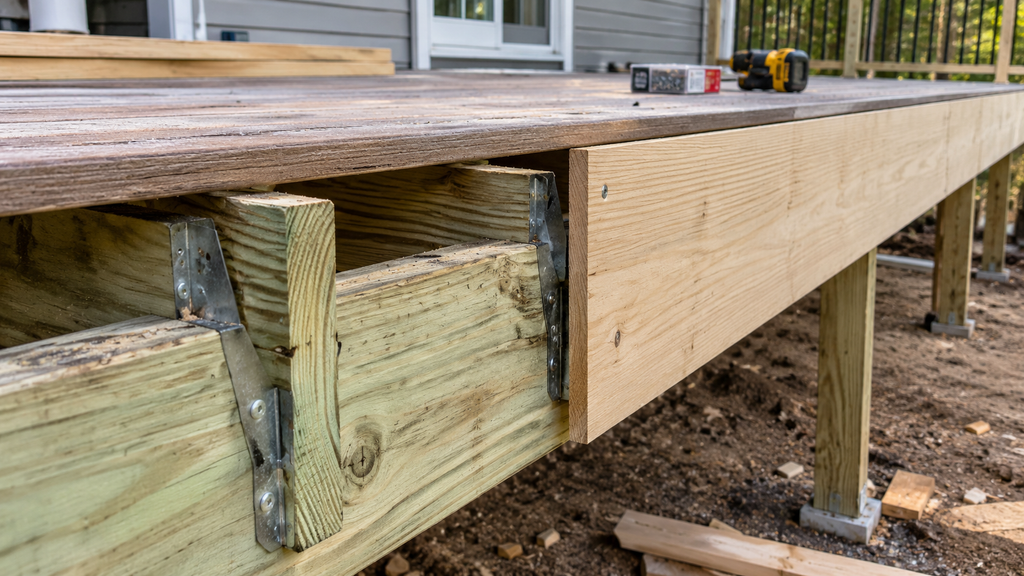
Deck fascia is a finishing board installed along the outside edge of a deck, typically covering the rim joist and, depending on the design, the exposed ends of decking boards. It is also known as a rim joist cover or deck fascia board.
Its placement depends on how the deck’s edges are finished. On decks without a perimeter border, fascia covers the rim joist and may conceal the decking ends, usually sitting flush with or slightly below the deck surface. With a picture-frame border, fascia typically sits beneath the perimeter board, although some designs align it with the top edge.
Regardless of placement, fascia is decorative rather than structural. It doesn’t support the deck, secure railings, or reinforce the frame. Those functions belong to the joists, beams, ledger, and posts. As a result, fascia boards are often thinner than standard decking boards.
It’s also worth distinguishing deck fascia from roof fascia. Although they share the same name, roof fascia runs along the roof edge and may support gutters, while deck fascia finishes the exposed perimeter of a deck.
What Does a Deck Fascia Board Actually Do?
A fascia board does three jobs well and one job only partly.
- Creates a finished edge – It gives the deck a clean outline you can match to the decking or contrast against it for a deliberate look.
- Conceals framing – It hides the rim joist and, in some designs, the board ends and imperfect cuts.
- Adds a design layer – Color and profile choices at the edge frame the whole deck, especially on stairs and curves.
Fascia’s secondary job is to provide partial protection by covering exposed framing and reducing direct exposure to sunlight and splashing water. However, it cannot replace proper flashing, drainage, or regular inspections. It also cannot prevent pests from entering beneath the deck through gaps around corners, stairs, or ground-level openings.
Proper installation matters, too. Some manufacturers require gaps or spacers behind fascia to allow airflow and water drainage. Without adequate drainage, moisture can become trapped against the framing, increasing the risk of deterioration. Fascia should therefore be treated as finishing trim, not a waterproof barrier.
Fascia vs. Deck Skirting
People mix these up constantly, and some retailers use the words loosely. The cleanest way to separate them is by what each one covers.
| Deck Fascia | Deck Skirting | |
| What It Covers | The edge of the deck frame (rim joist, sometimes board ends) | Some or all of the open space below a raised deck |
| Where It Sits | Along the perimeter, at the deck’s edge | Between the deck edge and the ground |
| Typical Materials | Wood, composite, PVC | Lattice, horizontal or vertical boards, plantings |
| Needed? | Optional, but common | Optional; matters most on tall or visible decks |
Fascia and skirting often work together, but skirting should be attached to suitable deck framing rather than anchored directly to the ground, where frost heave can cause shifting or misalignment. When you add deck skirting, include an access panel to allow inspections for moisture, pests, and other problems beneath the deck.
What to Use for Deck Fascia
Choosing what to use for deck fascia largely depends on your decking material. Matching the fascia to the decking helps create a consistent appearance, while considering each material’s durability and maintenance needs can help you make a practical choice.
Wood fascia
Wood suits a wood deck and works well when you want a contrasting edge, such as a painted or stained board against natural decking. Cedar, redwood, and treated pine are common choices. Wood costs less up front, but it takes more care. It needs a protective finish, and you should re-coat it when the finish wears, cracks, or peels.
Maintenance timing depends on your climate, sun exposure, and finish, so follow the finish manufacturer’s guidance instead of a fixed schedule. Seal the cut ends and any hidden faces before installation.
Composite and PVC fascia
Many composite and PVC decking lines offer matching fascia boards, making it easier to coordinate color and texture. Composite fascia typically pairs with composite decking, while PVC fascia pairs with PVC decking. Both generally require only periodic cleaning with mild soap and water, although manufacturers have specific maintenance, fastening, and spacing requirements. Neither should be used as a structural deck board.
Aluminum is another option, although it’s more commonly used to cover existing wood fascia than as a standalone board. Compared with composite and PVC options, it can be more expensive and harder to match with the decking color.
How to Install Deck Fascia Board
Installation methods vary by material, particularly when it comes to fasteners, spacing, and expansion gaps. Follow these general steps alongside your manufacturer’s instructions.
Inspect the rim joist first
Before installing fascia, check the rim joist for soft spots, damage, or uneven surfaces. Repair any problems first, as fascia covers the framing but cannot correct underlying damage.
Measure and cut the fascia boards
Measure each section of the deck perimeter, accounting for corners, stair stringers, and any picture-frame borders. Cut the boards to fit, using mitered corners where the material allows. Measure each section separately rather than assuming the deck is perfectly square.
Use the correct fasteners
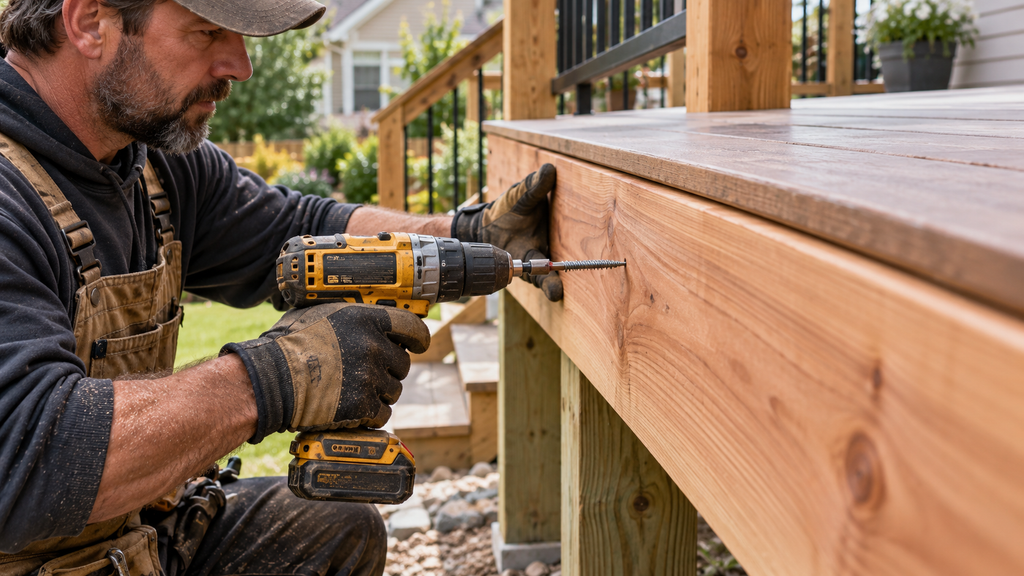
Once the boards are cut, select fasteners approved for your fascia material. Composite and PVC products may require specific screws, fastening systems, or pre-drilling methods, while wood fascia typically uses corrosion-resistant exterior screws. Follow the manufacturer’s instructions for fastener placement and spacing.
Position and attach the boards
Align the fascia with the decking edge and secure it using the specified fastening method. Maintain any required expansion gaps, spacers, and joint clearances to accommodate material movement and allow drainage where needed.
Inspect the finished edge
After installation, check that the fascia runs straight and all boards are securely attached. Remove trapped debris and confirm that joints and gaps meet the manufacturer’s requirements.
Avoid closing required gaps simply to achieve a tighter appearance. Proper spacing helps accommodate expansion and contraction and, where specified, allows moisture to drain behind the fascia.
When Should You Repair or Replace Deck Fascia?
Common signs of damaged or deteriorating deck fascia include:
- Loose fasteners that pull out or no longer hold the board securely
- Bowing or waviness along the deck edge
- Cracked or split boards, particularly near ends and fasteners
- Peeling or damaged finishes on wood fascia
- Stains or dark streaks that may indicate water exposure
Before replacing damaged fascia, check whether the problem extends to the rim joist behind it. Remove a section of fascia and inspect the framing for softness, discoloration, or insect damage. If the framing is sound, replacing the fascia may be sufficient. Otherwise, address the underlying damage first.
It’s also important to identify any ongoing moisture problems. Poor drainage, missing flashing, or water runoff can damage replacement boards if the source isn’t corrected.
To help direct water away from the fascia, some builders add a drip groove beneath overhanging wood decking boards. However, this approach isn’t suitable for every material, so check the manufacturer’s instructions before modifying composite or PVC decking.
Conclusion
Understanding what is fascia on a deck starts with recognizing its role in finishing the exposed edges. Although fascia improves the deck’s appearance and provides some protection to the framing, it isn’t structural and cannot replace proper drainage, maintenance, or repairs.
For lasting results, choose a fascia material that complements your decking and install it according to the manufacturer’s instructions. Before replacing damaged boards, inspect the underlying framing and address any moisture problems to prevent further deterioration.