

Most people plan their deck around the boards underfoot and treat the railing as an afterthought, something to pick once the budget is nearly spent. That’s backwards. You look at your railing far more than you look at your decking. It frames every view, defines the silhouette of your home from the yard, and, done right, turns a functional safety barrier into the detail that makes the whole space feel finished.
This guide walks through deck railing ideas across every major material and common railing system types, covers stairs and DIY builds, and closes with the code basics every homeowner should know before ordering materials. Whether you’re drawn to classic painted wood, a low-maintenance composite system, or a cable rail that disappears into the view, you’ll find a direction that fits your home, your climate, and your budget.
How to Choose the Right Deck Railing
Before falling for a Pinterest-worthy style, consider these filters as part of your broader deck planning process:
- Home style – Match materials, line-weight, and deck-to-house color combinations to your existing architecture for visual cohesion.
- Deck height and view – Use cable, glass, or slim aluminum to protect scenic views.
- Maintenance tolerance – Choose composite or aluminum to avoid regular staining and sealing.
- Stair layout – Check for graspable handrails needed to meet safety codes.
- Budget – Use pressure-treated wood for savings, or glass and cable for luxury.
- Local code – Confirm height minimums and baluster spacing rules before buying.
Wood Deck Railing Ideas
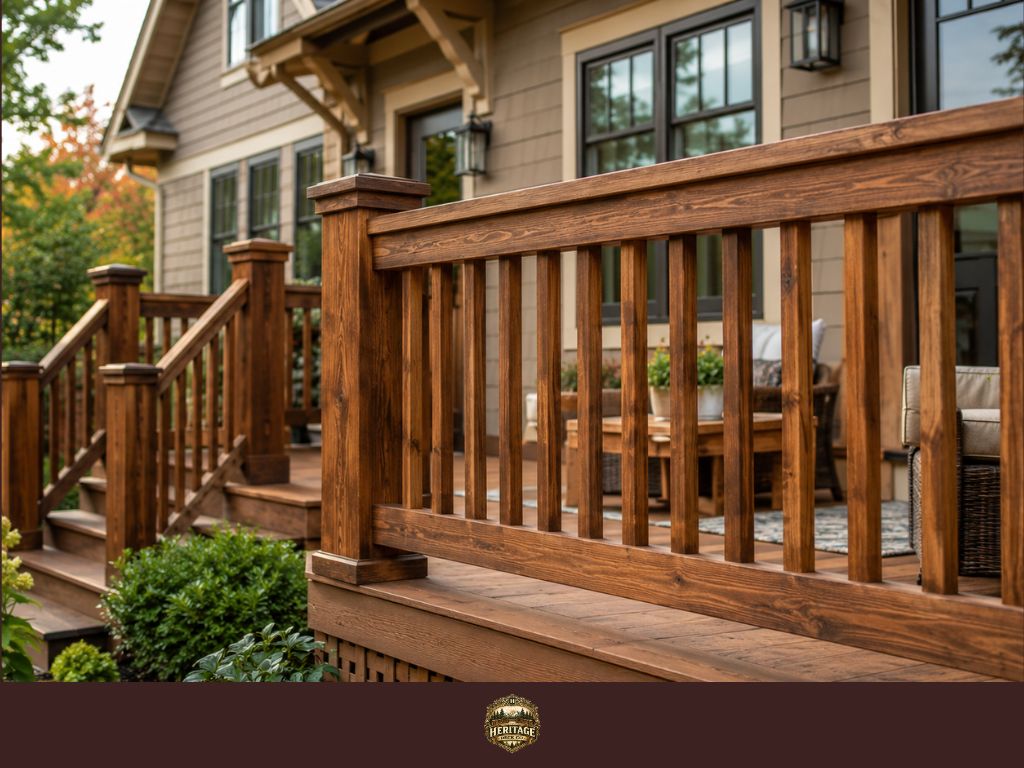
Wood remains the most familiar deck railing style. It’s warm, adaptable, and easy to customize on almost any budget.
| Style | Key Features & Advantages | Visual & Design Impact |
| Classic Vertical Balusters | Traditional square or turned wood profiles | Creates a timeless default look that suits most homes |
| Painted Wood Railing | Crisp white finish with an instantly polished feel | Delivers a clean appearance that matches most siding colors |
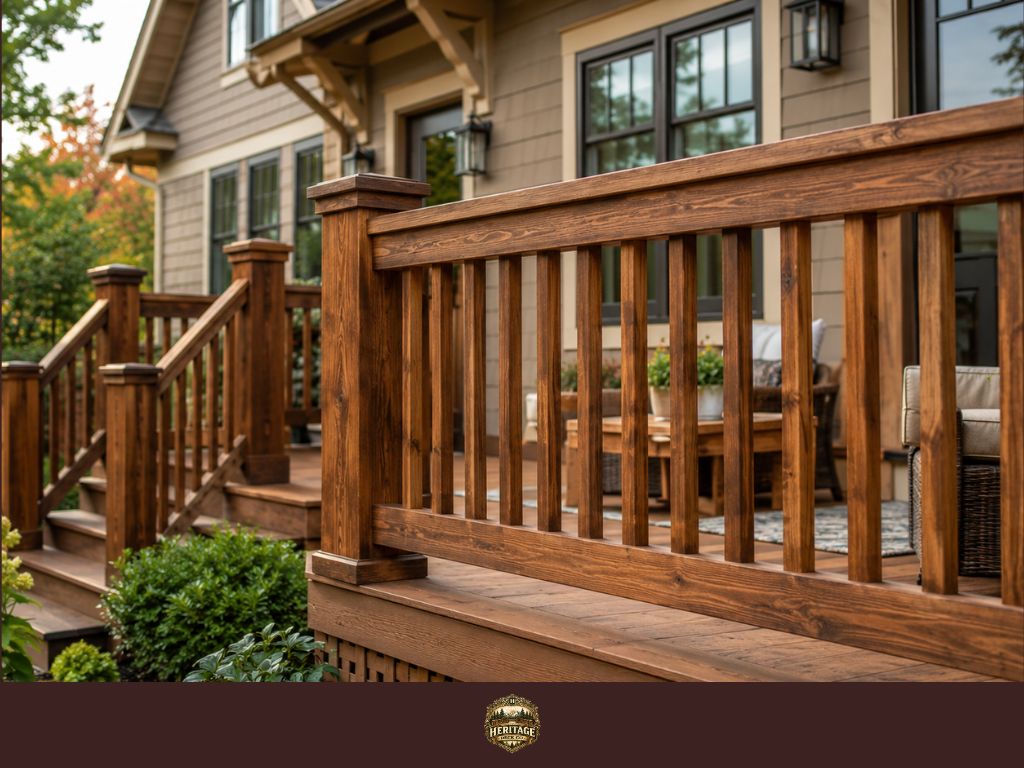
| Stained Railing | Keeps the natural wood grain visible | Blends seamlessly with homes near natural surroundings |
| Cedar-Style Railing | Rich natural color with high organic resistance | Ages to a soft gray for a rustic look in rot-prone climates |
| Wood Drink Rails | Widened flat top-rail layout | Functions as a usable shelf built for entertaining spaces |
| Wood Posts + Metal Balusters | Hybrid mix of wood warmth and thin metal bars | Maximizes sightlines below while keeping a classic look up top |
The tradeoff is upkeep. Left untreated, wood splinters, warps, and rots, especially in humid climates. That’s why you should plan for periodic sanding and evaluate your staining and sealing options, while checking yearly for soft, spongy wood.
Metal Deck Railing Ideas
Metal railing has become the go-to choice for homeowners who want a durable, low-maintenance look that reads as modern without feeling cold.
Strong metal deck railing ideas include:
| Style | Key Features & Advantages | Visual & Design Impact |
| Black Aluminum | Default modern choice with high durability | Disappears against greenery and contrasts light decking |
| Powder-Coated Metal | Bronze, white, or charcoal with superior rust resistance | Offers an unexpected color palette and a clean look |
| Slim Vertical Balusters | Ultra-thin profile with strong structural support | Preserves sightlines and blocks less view than bulky pickets |
| Wood Top Rail Hybrid | Wood top rail combined with low-maintenance metal | Provides a warm hand surface and blends design styles |
| Modern Metal Stairs | Matched to perimeter railing with consistent hardware | Ensures visual continuity and creates a cohesive look |
Metal’s biggest advantage is durability. Quality aluminum and powder-coated steel resist rust, don’t rot, and rarely need more than an occasional rinse. The tradeoff is upfront cost and the fact that, unlike wood, changing the color later is a real project rather than a weekend touch-up.
Composite Deck Railing Ideas
If your deck boards are composite, matching composite railing is the obvious pairing, though it also stands strong on its own for anyone who simply wants low maintenance.
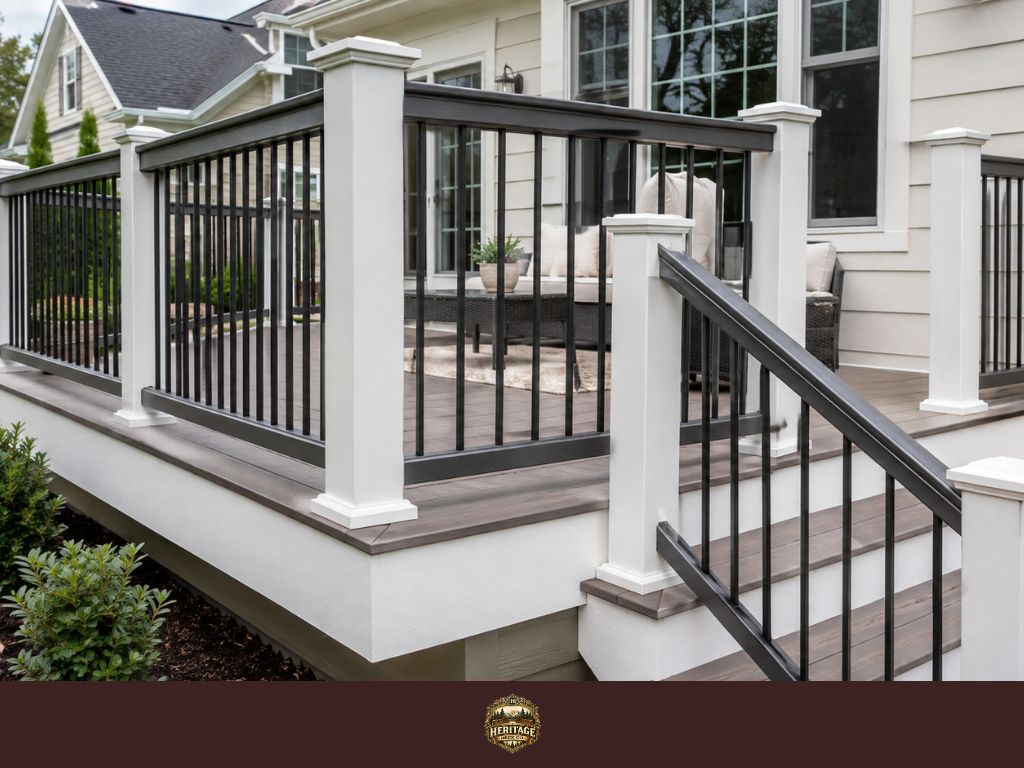
| Style | Key Features & Advantages | Visual & Design Impact |
| White Composite | Safest and most universal choice | Works seamlessly with almost any deck color or home style |
| Black Composite | Bolder and darker design choice | Delivers a high-contrast monochromatic look against light decking |
| Two-Tone Railing | Mixes a dark top rail with white posts | Offers a high-end custom feel without the custom price tag |
| Metal Baluster Hybrid | Combines composite posts with thin metal bars | Provides a much sturdier structure with more open sightlines |
| Composite Drink Rail | Widened flat top-rail surface | Brings functional wood design ideas over minus the upkeep |
Composite won’t rot, warp, or splinter, and it usually only needs an occasional soap-and-water wash. It costs more upfront than wood or aluminum, but the near-zero maintenance often pays for itself over time.
Cable, Rod and Glass Railing Ideas
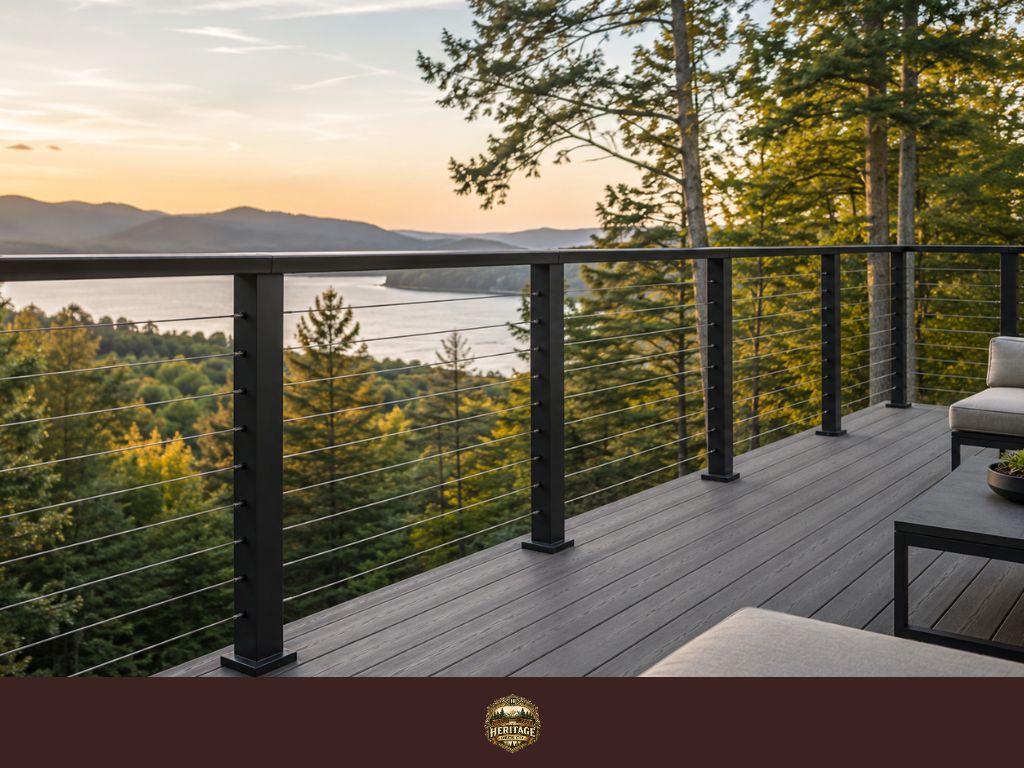
When the view is the whole point of the deck, these are the systems designers reach for first.
- Horizontal cable railing – Stainless steel cables strung between posts, prized for near-total visual transparency and a clean, modern line.
- Aluminum rod railing – Thin vertical or horizontal rods that read as more substantial than cable but still preserve most of the view.
- Glass panel railing – The most transparent option available, ideal for waterfront, mountain, or skyline views where nothing should interrupt the sightline.
- Black posts with stainless cable infill – A popular combination that grounds the design with visible structure while keeping the infill nearly invisible.
- Glass railing for wooded, lake, or elevated views – Often chosen specifically because it lets the landscape read as part of the living space rather than something viewed through a barrier.
These view-focused systems generally cost more than standard baluster railing and often require more precise installation. Cable needs proper tensioning, and glass needs code-compliant framing and edge treatment. In coastal or high-wind environments, glass in particular may need extra maintenance to manage salt residue and water spotting, so factor your climate into the decision, not just the view.
Deck Railing Ideas for Stairs
Stair railings are easy to overlook, but they have some of the strictest code requirements and are critical for safety.
Ideas worth considering for stairs:
- Matching the main deck railing for visual continuity from the deck to the steps.
- Black metal stair railing for strong contrast and better visibility in low light.
- Composite stair railing to maintain low-maintenance benefits from deck to steps.
- Wood stair railing for traditional homes, properly sealed to handle added wear near the base.
- Stair and deck lighting in post caps, stringers, or risers to improve nighttime safety.
- Multi-level transition railings for decks leading to patios or yards, with custom post spacing where needed for code compliance.
Keep in mind that stair guards, handrails, and perimeter railings can have different code requirements for height, graspability, and continuous runs. Never assume your perimeter railing specification automatically meets stair requirements.
DIY Deck Railing Ideas
Installing your own deck railing can significantly cut project costs. Simple wood railings with standard spacing and preassembled railing kits with pre-cut parts are accessible DIY options. You can also mix wood posts with metal balusters using no-weld brackets, repaint an existing railing, or replace post caps in an afternoon. Solar or low-voltage lighting can add both ambiance and safety without complex rewiring.
However, elevated or structural railing work is safety-critical. Improperly anchored railings on stairs or second-story decks are common deck safety failures. If your project involves high elevations, structural framing, or unclear local codes, get professional guidance before handling the finish work yourself.
Unique Deck Railing Ideas
Mixed materials, such as wood posts with metal balusters or composite rails with glass infill, create a layered, custom look. For added visual interest, a two-tone railing can contrast the posts with the infill, while curved sections soften the straight lines of a deck and work especially well around pools or circular seating areas. To add function without extra bulk, a drink rail provides a convenient surface along the top of the railing.
For more privacy, solid panels can transition into open railing sections, balancing seclusion with views. Planter boxes can also be built directly into the railing, adding greenery without taking up deck space. For a modern finish, black metal balusters or cable paired with warm wood creates strong contrast, while integrated lighting in post caps, top rails, or stair risers adds both style and visibility after dark.
Deck Railing Code and Safety Reminders
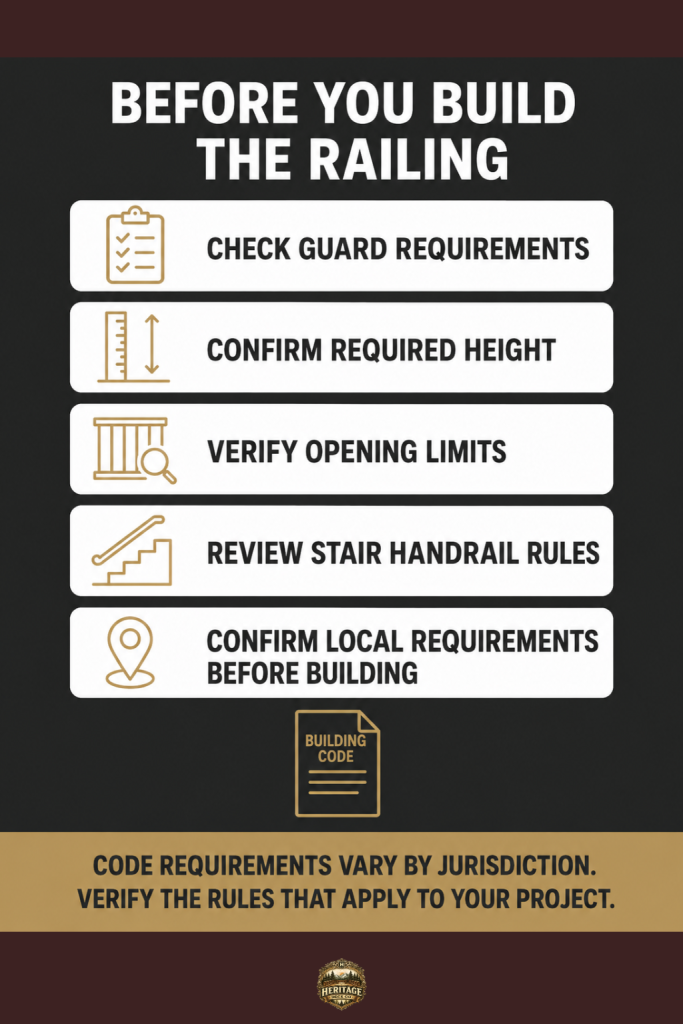
Requirements vary by jurisdiction, but several standards are common across U.S. residential codes. Deck railings are commonly required to be at least 36 inches high when the deck is above a certain height, while stair guards and commercial applications may have different requirements. Baluster spacing typically must prevent a 4-inch sphere from passing through, helping prevent children from slipping through or becoming trapped. Stair handrails generally must be continuous, graspable, and within the required height range for safe support.
Always confirm current requirements with your local building department, as codes and enforcement vary by municipality. Inspect existing railings at least yearly for looseness, wobbling, or soft wood. Repair or replace any railing that shifts under hand pressure immediately, rather than simply monitoring it.
Final Takeaway
There is no single best option, only the right fit for your home, view, and budget. When exploring deck railing ideas, consider your lifestyle: wood offers timeless warmth with regular upkeep, metal brings modern durability, and composite delivers low maintenance. If you want to protect a scenic view, choose cable or glass systems, or mix materials for a custom look.
Always start with your local building codes and home architecture. A safe, compliant railing that matches your house will always outlast one chosen on aesthetics alone.