

Homeowners ask this question every year, and most get a vague answer: “Spring or summer.” That advice is incomplete—and often expensive.
The best time of year to build a deck depends less on the calendar and more on what you value most: cost, speed, material performance, contractor availability, or when you actually want to use the deck. When you break the decision down strategically, clear winners emerge—and they’re rarely the seasons most people expect.
This guide merges contractor insight, material science, permitting realities, and seasonal economics into one decisive framework so you can choose the right time for your priorities, not someone else’s assumptions.
Short Answer: There Is No Single “Best” Time — It Depends on Your Priority
If you’re looking for a one-size-fits-all answer, you won’t find one here. But if you want the right answer, start with what matters most to you:
- Cost: The cheapest time to build a deck is almost never peak season.
- Timeline: Faster approvals and fewer delays happen outside spring.
- Contractor availability: Off-season projects get more attention.
- Material performance: Temperature and moisture matter more than most homeowners realize.
- Landscaping impact: Frozen or dormant ground changes everything.
- When you want to use the deck: Timing construction vs. enjoyment is a trade-off.
Once you understand how each season affects these factors, the decision becomes obvious.
Season-by-Season Breakdown: Pros, Cons, and Real Trade-Offs
Spring: High Demand, High Competition
Spring feels like the logical time to build a deck. The weather improves, homeowners get motivated, and outdoor living is top of mind. That logic is exactly why spring is so competitive.
What works in spring
- Moderate temperatures for crews
- Easy mental alignment with outdoor season
What works against you
- Contractor backlogs are longest
- Permit offices experience seasonal congestion
- Material prices begin climbing with demand
- Schedules slip as inspections stack up
Best for: Homeowners who planned months in advance and locked in contractors early.
Summer: Fast Builds, Peak Pricing
Summer offers long daylight hours and predictable workdays, which can speed up daily progress. But that speed comes at a premium.
Advantages
- Maximum daylight = longer workdays
- Fewer weather stoppages
Downsides
- Highest labor and material pricing of the year
- Heat and humidity affect wood moisture and composite expansion
- Increased risk of lawn and landscaping damage
- Projects are often rushed to meet demand
Best for: Families with fixed schedules who accept higher costs to meet a hard deadline.
Fall: The Sweet Spot for Balance
Fall consistently delivers the best balance between price, quality, and predictability—and it’s where experienced builders quietly prefer to work.
Why fall works
- Cooler temperatures improve working conditions
- Contractor schedules open up
- Stains and sealers cure more evenly
- Fewer weather-related delays
- More reliable inspection timelines
Fall avoids the chaos of spring and the premium pricing of summer while maintaining excellent build conditions.
Best for: Homeowners who want strong craftsmanship without peak-season pricing.
Winter: The Cheapest Time to Build a Deck (When Done Correctly)
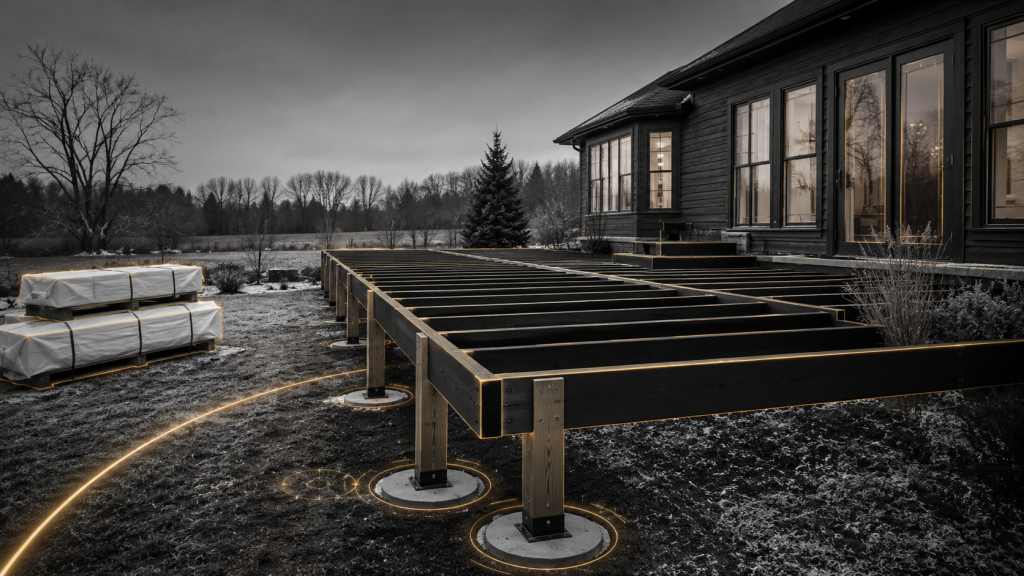
Contrary to popular belief, winter is often the cheapest time to build a deck—as long as the project is planned and executed properly.
Winter advantages
- Lowest contractor demand = maximum scheduling flexibility
- Potential labor and material savings
- Faster permit approvals due to lower volume
- Minimal landscaping damage on frozen or dormant ground
When winter makes sense
- Footings can be installed before deep freeze or with proper methods
- Materials are acclimated correctly
- Builders understand cold-weather installation requirements
When winter doesn’t
- Extreme freeze zones without preparation
- Projects requiring immediate finishing in sub-freezing conditions
Best for: Homeowners prioritizing cost savings, scheduling ease, and spring readiness.
Cheapest Time to Build a Deck: What Actually Drives Cost
The cheapest time to build a deck isn’t about luck—it’s about supply and demand.
What drives pricing
- Contractor demand cycles: Peak season inflates labor costs.
- Material pricing: Lumber and composite prices spike when demand surges.
- Scheduling pressure: Rushed timelines increase inefficiencies and errors.
Off-season projects reduce these pressures, often lowering total project cost—not just line-item pricing.
Important reality: Cheapest doesn’t always mean best. A poorly timed project can create long-term maintenance issues that erase short-term savings.
How Deck Materials Behave by Season (What Homeowners Miss)
Seasonal timing affects how materials perform long after installation.
Composite decking
- Expands and contracts with temperature changes
- Cold-weather installation requires adjusted spacing
- Proper acclimation prevents long-term movement issues
PVC decking
- More dimensionally stable than composites
- Still affected by extreme temperature swings
Wood decking
- Moisture content varies by season
- Summer installs risk higher moisture retention
- Cooler, drier conditions reduce warping and checking
Install timing isn’t cosmetic—it affects durability
Permits, Inspections, and Scheduling in Indiana
Permit and inspection timelines vary dramatically by season.
Seasonal realities
- Spring: highest permit volume, longest delays
- Summer: inspection backlogs grow
- Fall/Winter: faster approvals, easier scheduling
Indiana’s frost-line requirements also influence footing timing, making early planning essential for winter builds.
This is where local expertise matters—rules are consistent, timelines are not.
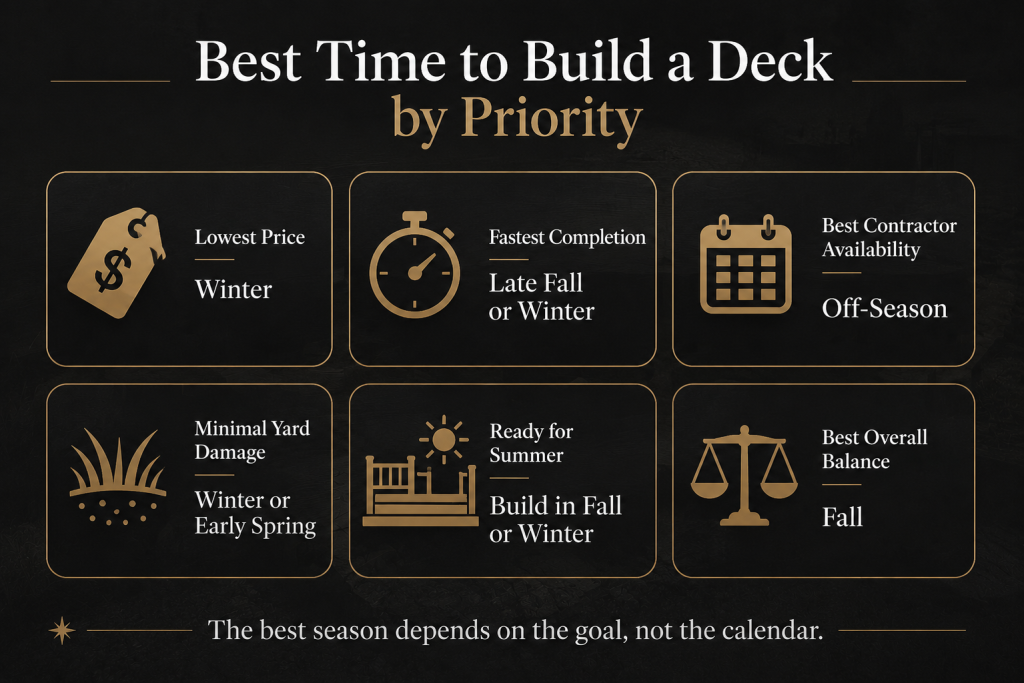
Best Time to Build a Deck Based on Your Goal
If You Want the Lowest Price
→ Winter
If You Want the Fastest Completion
→ Late fall or winter
If You Want Minimal Yard Damage
→ Winter or early spring
If You Want Your Deck Ready for Summer
→ Build in fall or winter
If You Want the Easiest Scheduling
→ Off-season (late fall–winter)
Strategy beats season every time.
So, What’s the Best Time of Year to Build a Deck in Indiana?
For most homeowners, the best time of year to build a deck in Indiana is late fall through winter. It offers the strongest combination of pricing leverage, contractor availability, predictable scheduling, and long-term performance.
Spring and summer aren’t wrong—but they are reactive. Strategic homeowners plan ahead and build when others hesitate.
That mindset is exactly why companies like Heritage Deck emphasize proactive planning over seasonal urgency.
Planning Ahead: When to Start Design vs. Construction
- Design: 3–6 months before desired build window
- Permitting: Immediately after design finalization
- Construction: Off-season whenever possible
Realistically, homeowners should start conversations earlier than they think. Waiting until spring often means waiting until next year.
Talk to a Contractor Before You Pick a Season
Every property is different. Soil conditions, access, local regulations, and material choices all affect timing.
The smartest move isn’t choosing a season—it’s choosing informed guidance based on your site, not assumptions.
Conclusion
The best time of year to build a deck isn’t determined by tradition or weather alone—it’s determined by planning, priorities, and timing the market correctly. While spring and summer may feel intuitive, they often come with higher costs, tighter schedules, and more compromises. Homeowners who think ahead and build in the fall or winter frequently benefit from better contractor availability, smoother permitting, stronger material performance, and meaningful cost savings.
The real advantage comes from aligning your build timeline with your goals—whether that’s minimizing price, protecting your yard, or having a finished deck ready the moment warm weather returns. When strategy leads the decision, the season becomes a tool, not a limitation.