

The best under deck drainage system depends on whether you are building a new deck or retrofitting an existing one. The right system protects the framing, controls water flow, and keeps the space below dry enough for storage, seating, lighting, or a finished outdoor living area.
For homeowners in Indiana, this decision matters even more. Freeze-thaw cycles, snow runoff, heavy spring rain, gutter capacity, and ledger flashing all affect how well an under-deck system performs long-term. A system that works in a mild climate can fail early if it traps moisture, drains too slowly, or leaves framing exposed through Midwest winters.
This guide explains what actually matters: above-joist versus below-joist systems, new-build versus retrofit options, realistic under deck drainage system cost ranges, common installation problems, and how to choose the right setup before spending thousands of dollars.
What Is an Under Deck Drainage System?
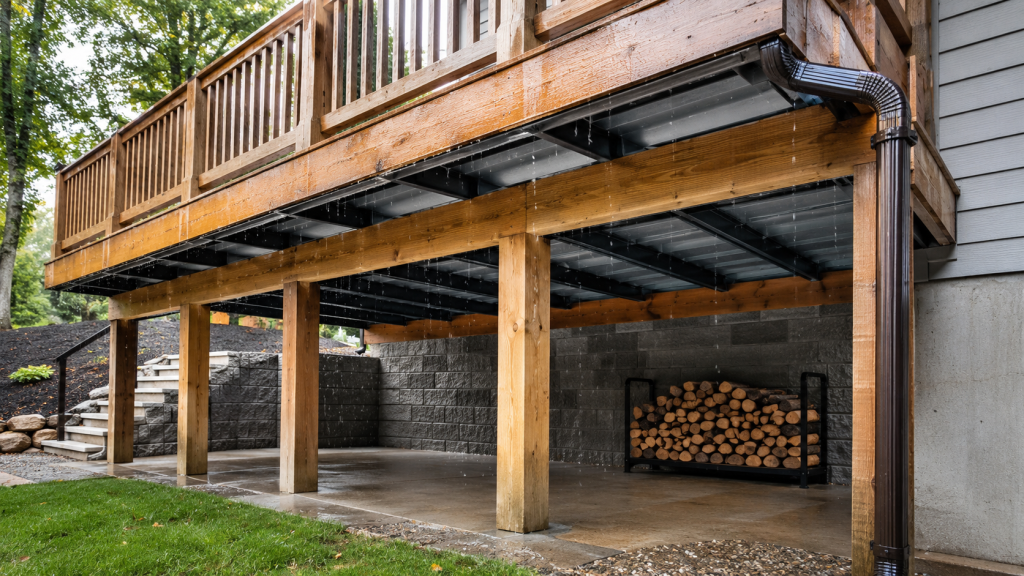
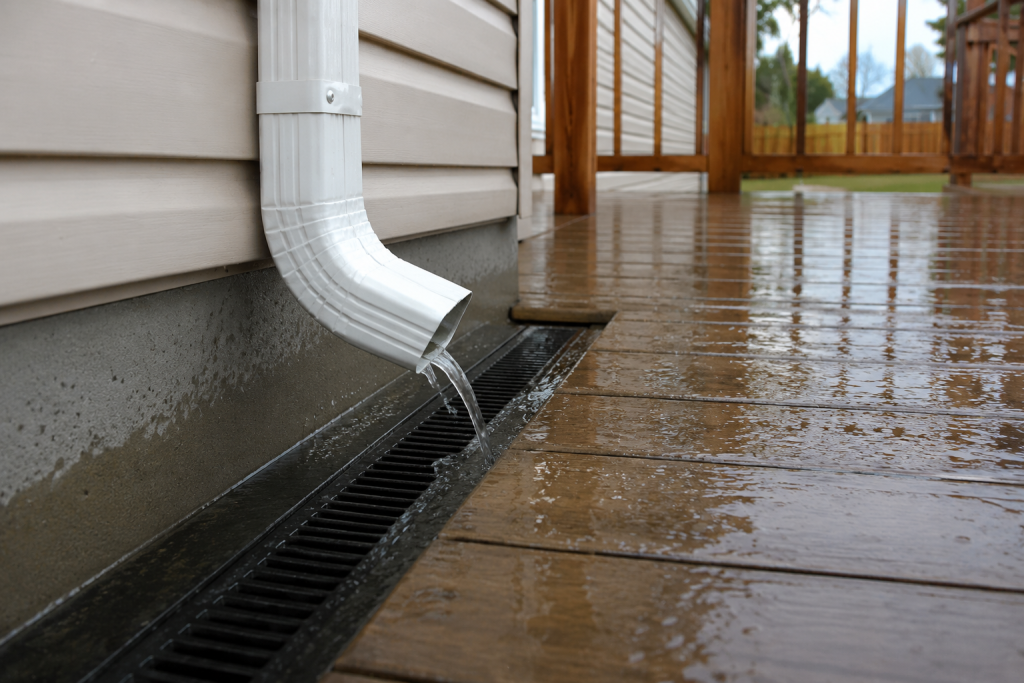
An under deck drainage system captures rainwater that passes between deck boards and redirects it away from the area below. Instead of letting water drip through the deck, soak the joists, and turn the space underneath into a muddy or unusable zone, the system channels water into gutters or downspouts.
There are two primary types: above-joist systems and below-joist systems.
Above-joist systems are installed over the deck joists and under the deck boards. Water passes through the gaps in the decking, lands in troughs or membranes, and drains away before it reaches the framing. These are often called over-joist, topside, or membrane drainage systems.
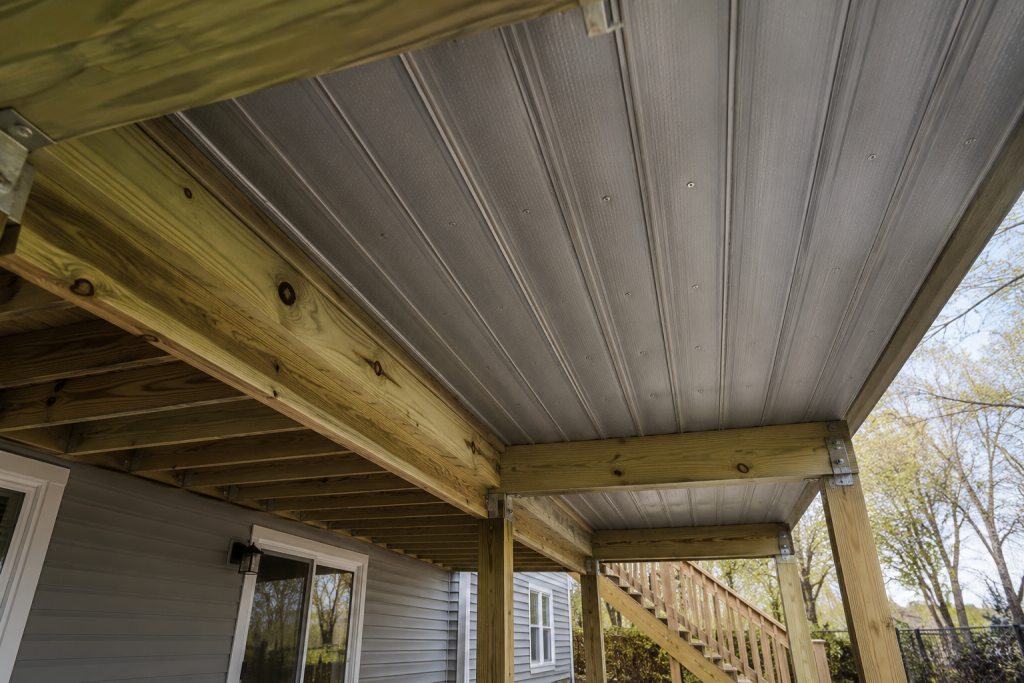
Below-joist systems are installed underneath the deck framing. They catch water after it passes through the boards and drips past the joists, then direct it toward a gutter or drainage point. These are common for existing decks because they can usually be installed without removing deck boards.
The simplest distinction is this: above-joist systems protect the structure first; below-joist systems reclaim the space below first. Both can work, but they solve slightly different problems.
What Is the Best Under Deck Drainage System for a New Deck?
For a new deck, the best under deck drainage system is usually an above-joist system installed during framing before the deck boards go down.
That timing is the biggest advantage. When the deck is still open, a contractor can integrate drainage directly into the structure instead of working around finished boards, railings, stairs, and trim later.
Above-joist systems work best for new decks because they:
- Keep water off the joists
- Reduce long-term moisture exposure
- Make future ceiling installation cleaner
- Help protect fasteners and framing hardware
- Avoid the headroom loss common with some retrofit systems
- Support finished outdoor spaces below the deck
This is especially important for elevated decks, walk-out basements, and second-story decks where the homeowner wants to use the lower area as a covered patio, outdoor kitchen, storage zone, or lounge space.
When designing decks in Indianapolis, integrating drainage during framing is usually the smarter long-term move. Indiana decks deal with humid summers, winter snow, and repeated freeze-thaw cycles. If water regularly sits on framing members or collects near the ledger board, the deck can age faster than homeowners expect.
Above-joist drainage is not only about keeping people dry underneath. It is about designing the deck so the frame is not constantly fighting water.
What Is the Best Under Deck Drainage System for an Existing Deck?
For an existing deck, the best option is usually a below-joist retrofit drainage system.
Below-joist systems can often be installed from underneath the deck without removing the decking boards. That makes them practical for homeowners who already have a structurally sound deck and want to make the lower space usable.
The biggest benefits are convenience and lower disruption. You do not have to tear up deck boards, disturb railings, or rebuild the surface. For many homeowners, that is the difference between a realistic upgrade and a project that becomes too expensive.
Below-joist systems are useful when you want to create:
- Dry storage under a deck
- A covered patio below a raised deck
- A finished ceiling under an existing deck
- A sheltered seating area near a walk-out basement
- A cleaner look below exposed joists
But there is a structural reality many articles ignore: a retrofit system does not stop water from touching the joists first.
That does not automatically make below-joist systems bad. It means the deck framing needs to be inspected before installation. If the joists already show rot, mold, fastener corrosion, ledger problems, or poor ventilation, covering the underside can hide the issue and make it worse.
A retrofit should always begin with a framing inspection. Soft wood, failing flashing, clogged drainage areas, or improper slope should be corrected before adding panels, troughs, lighting, or ceiling finishes.
Indiana Climate Factors Most Homeowners Overlook
A deck drainage system in Indiana has to handle more than a light summer shower. The Midwest creates moisture conditions that expose weak installations quickly.
- Freeze-thaw expansion is a major factor. Water that enters small gaps can freeze, expand, thaw, and repeat throughout winter. That movement can stress seams, fasteners, gutters, downspouts, and drainage edges.
- Snowmelt surge is another issue. Snow does not drain like rain. It sits, melts slowly, refreezes, and then releases in larger flows during warmups. A drainage system needs enough capacity to handle water moving off the deck in waves, not just steady rainfall.
- Ice buildup can also become a problem. If water drains into shaded or poorly sloped areas, ice can form near gutters, downspouts, stairs, and patios. This creates slip hazards and can force water back into the system.
- Ledger flashing is one of the most important details. The ledger board connects the deck to the home. Poor drainage near the house can push water toward the ledger instead of away from it. If the deck flashing is missing, damaged, or poorly integrated, moisture can reach the house framing.
Decking material matters too. Composite and PVC boards resist surface rot better than wood, but that does not mean the frame is protected. Most decks still use pressure-treated lumber framing. Drainage protects the structure beneath the surface, not just the boards people walk on.
Under Deck Drainage System Cost: Realistic Ranges
Under deck drainage system cost depends on deck size, system type, access, ceiling finish, electrical work, gutter tie-in, and whether the project is part of a new build or retrofit.
For above-joist drainage on a new deck, expect roughly $8 to $15 per square foot installed. Costs depend on deck square footage, framing layout, drainage membrane, joist spacing, gutter routing, stairs, beams, and post locations.
Above-joist systems may cost more upfront, but they are usually more efficient to install during construction than after the deck is finished.
For below-joist retrofit systems, expect roughly $10 to $20 per square foot installed. Costs depend on existing deck height, access below the deck, joist condition, drainage panel type, headroom limitations, and whether ceiling panels are included.
A full finished under-deck living space can range from $3,000 to $12,000+, depending on size and features. A simple dry storage area costs far less than a finished covered patio with ceiling panels, recessed lighting, fans, trim, outlets, and drainage tied into a gutter system.
Common Problems With Poor Drainage Installation
A drainage system can fail even if the product is good. Most problems come from poor planning, rushed installation, or ignoring the structure before covering it.
The most common issue is improper slope. Water should never sit inside the system. If the slope is too shallow or inconsistent, water can pool, collect debris, freeze, or leak through seams.
Another major issue is a poor gutter connection. Drainage systems need a reliable exit. If the gutter is undersized, misaligned, or clogged, water can overflow into the space the system was supposed to protect.
Moisture trapped against the ledger board is one of the highest-risk mistakes. Drainage should move water away from the house, not toward it. The ledger area needs proper flashing and water management.
Other problems include fastener corrosion, mold growth, hidden rot behind ceiling panels, ice dam formation, and electrical risk from improperly sealed lights, fans, or outlets.
A dry-looking ceiling does not mean the system is safe. The water has to go somewhere, and if that path is poorly designed, the damage may stay hidden until it becomes expensive.
Do You Even Need an Under Deck Drainage System?
Not every deck needs one.
You probably do not need an under deck drainage system if your deck is close to ground level, there is no usable space below, you do not plan to store anything underneath, or your budget would be better spent on structural repairs, stairs, railing, or decking.
You should consider one if you have a walk-out basement, an elevated deck, a covered patio plan, an outdoor kitchen below, storage needs, or a finished ceiling goal.
The best use case is simple: an elevated deck with valuable space underneath. If that lower space could become storage, seating, entertaining space, or a finished patio, drainage can turn wasted square footage into usable outdoor living area.
Best Under Deck Drainage System for Composite Decks
Composite decks have their pros and cons, but they are one of the strongest candidates for under-deck drainage because homeowners already expect a longer-lasting, lower-maintenance outdoor structure.
Brands like Trex, TimberTech, and other composite or PVC decking products resist surface decay better than traditional wood deck boards. But the framing underneath still needs protection. Most composite decks are still built on pressure-treated lumber framing unless the project uses steel or aluminum framing.
That creates a common mismatch: premium decking above, moisture-exposed wood framing below.
An above-joist drainage system solves that problem better during a new build because it keeps water off the joists before it can sit, freeze, or soak into framing. It also pairs well with hidden fasteners, finished ceilings, and upgraded outdoor living areas below.
For existing composite decks, a below-joist retrofit system may still be the practical choice, but the same inspection rule applies. The frame must be checked before covering the underside.
Homeowners planning a composite deck in Indianapolis should think about drainage early, not after the deck is finished. Adding drainage during the framing stage is usually cleaner, more efficient, and better for long-term performance.
Conclusion
So, what is the best under deck drainage system?
For a new deck, choose an above-joist system. It provides better framing protection, cleaner integration, and stronger long-term water management.
For an existing deck, choose a below-joist retrofit system if the framing is healthy and you want to avoid removing deck boards.
For a finished outdoor living space, remember that drainage and ceiling panels are not the same thing. Drainage manages water. Ceiling panels create the finished appearance. A pretty ceiling without proper drainage is just hiding a moisture problem.