

The space beneath your deck is some of the most overlooked real estate in your entire backyard. Whether you have a towering raised deck or a modest platform, that dead zone underneath can become a fully functional storage area — if you plan it right. This guide covers smart, durable solutions for every deck type, the mistakes most homeowners make, and how to decide what’s worth building versus buying.
Before You Add Under-Deck Storage, Check These Limits
Before committing to any storage under deck ideas, audit your space first. Skipping this step is the single biggest reason homeowners end up with waterlogged belongings and wasted money.
Minimum clearance
Most solutions require at least 36 to 48 inches of vertical clearance to be genuinely useful. Below 18 inches, meaningful enclosed storage is impractical and will restrict airflow to your deck’s framing.
Drainage and slope
Water is the enemy. If your yard slopes toward the house, water pools directly underneath after heavy rain. Concrete pavers or compacted gravel are far better base materials than soil or mulch, which trap moisture and attract pests. Where drainage is a known issue, an under-deck membrane installed between the joists can redirect water before it reaches anything stored below.
Climate
Homeowners in humid regions or areas with hard freeze-thaw cycles face extra challenges. In these climates, sealed waterproof containers often outperform built-in compartments, and any enclosure material must be rated for year-round outdoor exposure.
When to skip it entirely
Ground-level decks, decks over saturated soil, and decks attached to homes with existing moisture problems are poor candidates. A storage shed placed adjacent to the deck is often the smarter investment.
Best Under Deck Storage Ideas by Deck Type
Storage Under Raised Decks
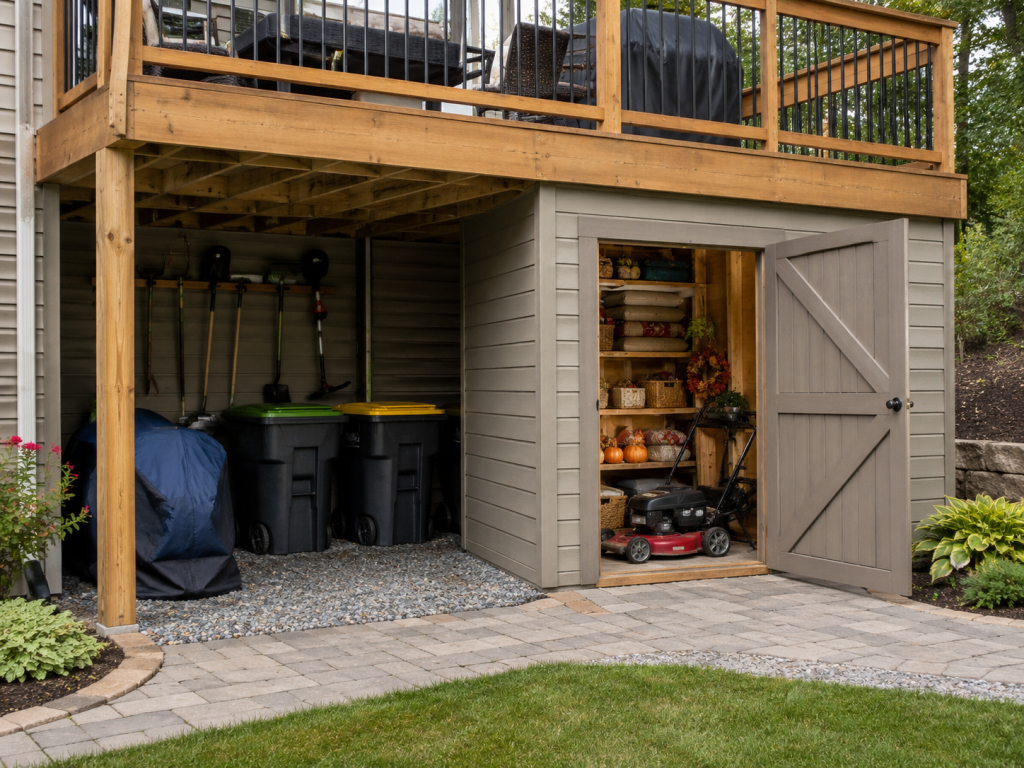
Raised decks — four feet or higher — offer the most flexibility. You have two approaches: open storage zones or fully enclosed storage rooms.
Open zones work well for items you access often and that tolerate light exposure — garden tools on wall-mounted hooks, roll-out bins, or zip-up bike tents for off-season gear. No construction required, and easy to start with.
Enclosed storage rooms involve adding perimeter deck skirting — lattice, composite panels, or removable fence boards — plus a door. When you also waterproof the deck’s underside with a drainage membrane, you create a genuinely dry space capable of storing cushions, seasonal décor, and small equipment like lawnmowers. The most common mistake here: not making the door wide enough. Plan for a minimum 32-inch opening so you can actually get things in and out.
Under Deck Stairs Storage Ideas
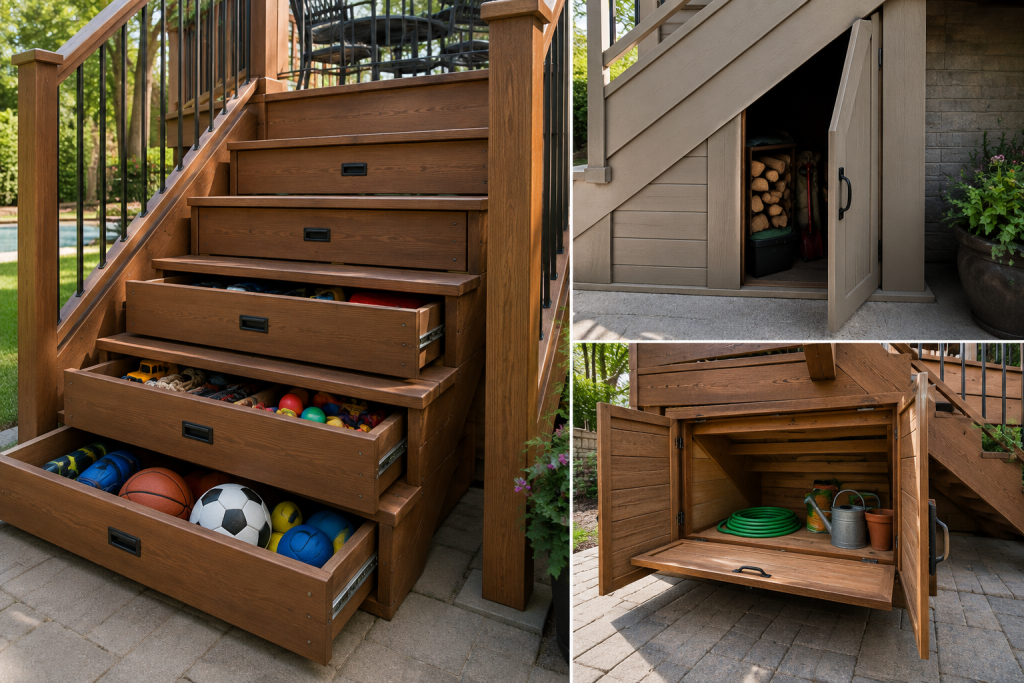
Stairs are one of the most underused storage opportunities on any deck. The triangular space underneath a standard staircase can be converted into practical storage without touching the structure itself.
The best under deck stairs storage ideas include built-in drawers in the stair risers for small tools and toys, a side-access door for larger items like firewood and seasonal gear, or a hinged swing-out panel finished to match the decking for a seamless look. Stair storage is easiest to plan during the original build. Retrofitting existing stairs can be structurally complicated, so have a contractor assess the framing before cutting any openings.
Storage Ideas for Low-Clearance Decks
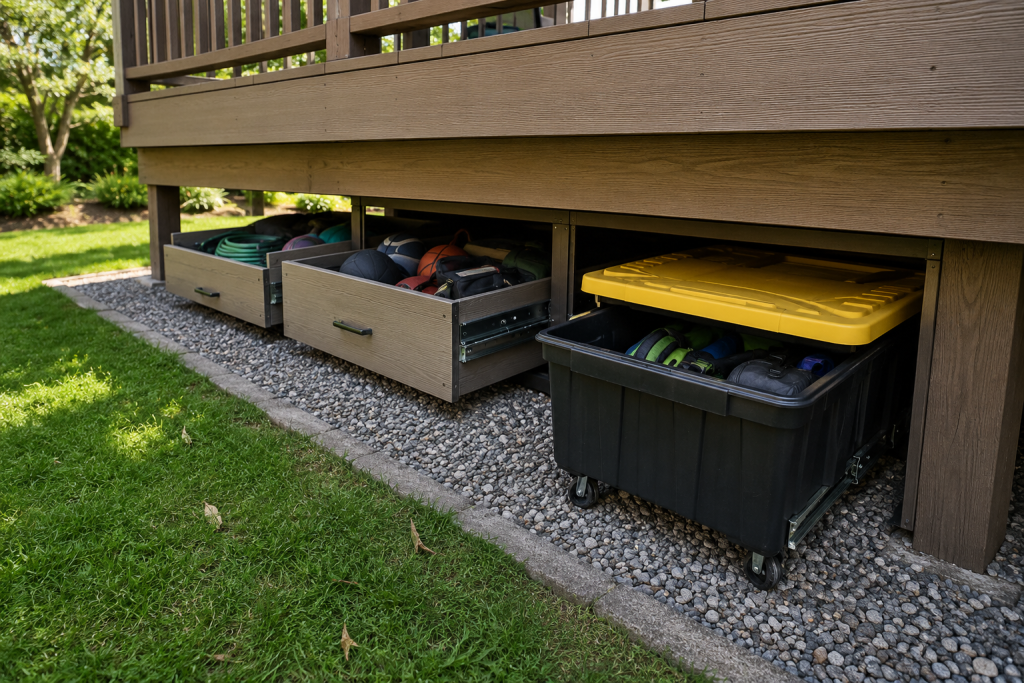
Low-clearance decks — under 36 inches — need a different mindset. Full enclosures here tend to trap moisture and restrict airflow, creating mold and rot problems that cost far more than they’re worth.
Stick to horizontal solutions instead: slide-out drawers on heavy-duty glides, weatherproof rolling bins you can pull out fully before accessing, or deck boxes positioned at the deck’s perimeter rather than underneath it. Avoid sealed enclosures entirely here — poor ventilation in low-clearance spaces is one of the leading contributors to premature deck framing rot.
Outdoor Deck Storage Ideas That Handle Moisture
Moisture management defines the success or failure of any outdoor deck storage idea. Even in dry climates, temperature swings and morning dew mean every solution you choose must account for water over years of use — not just on day one.
Open-air hooks and racks work well for metal tools, plastic gear, and PVC furniture. Sealed weatherproof containers are essential for anything fabric, rust-prone, or temperature-sensitive. Label bins by season or use type — it saves real time in early spring when you’re hunting for something buried under a winter’s worth of storage.
One important myth to dispel: no under-deck environment is truly moisture-free unless it has both a drainage membrane above and proper ventilation below. “Waterproof” on a product label describes the product — not the environment it’s sitting in.
Choosing the right moisture protection beneath the deck can also help prevent stored belongings and the structure itself from being exposed to persistent dampness.
Open vs. Enclosed Under-Deck Storage
Open storage maintains natural airflow, is easier to build, and gives you quick access to items. The trade-off is exposure to pests, wind-driven rain, and visibility. Enclosed storage looks cleaner and protects belongings far better, but poorly ventilated enclosures become humid, dark environments where mold and rodents thrive. Any enclosed space should include passive ventilation, deliberate gaps in the skirting or installed vents, and should be inspected every spring. Including these checks as part of your regular deck maintenance can help catch moisture, pest, and ventilation problems before they become expensive repairs.
What to Store — and What to Keep Out
Safe to store: Garden tools, cushions in sealed bins, bikes, lawnmowers, pool toys, seasonal decorations, and landscaping supplies.
Keep out: Flammable materials or fuel cans (fire risk, often a code violation), food of any kind (attracts wildlife), untreated wood and paper products, and electronics not rated for outdoor temperature ranges.
Organize by frequency — items you use weekly near the door, seasonal items deeper in the space.
When to DIY vs. When to Call a Contractor
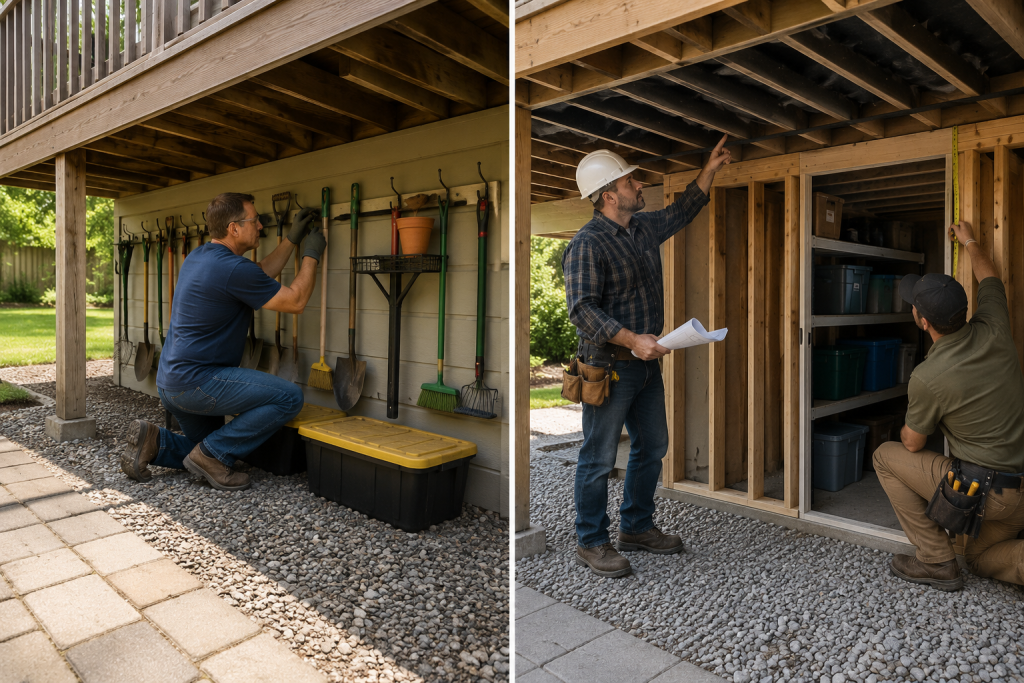
DIY-friendly projects include installing deck boxes and storage benches, adding hooks or open shelving, building removable lattice skirting, and laying pavers as a base layer. Call a contractor for full drainage system installations, enclosed rooms with proper framing and venting, stair storage retrofits, and anything that touches the deck’s structural components. Always check local codes before building any permanent enclosed structure — the North American Deck and Railing Association (NADRA) recommends this as a first step, not an afterthought.
Final Thoughts
The space beneath your deck has real potential — but realizing it takes more than a quick trip to the hardware store. Clearance, drainage, ventilation, and access planning all determine what works. The best solution isn’t always the most elaborate one. It’s the one that fits your deck, your climate, and how you actually use your outdoor space. Start with what you need, build for how you live, and let the space work for you.